


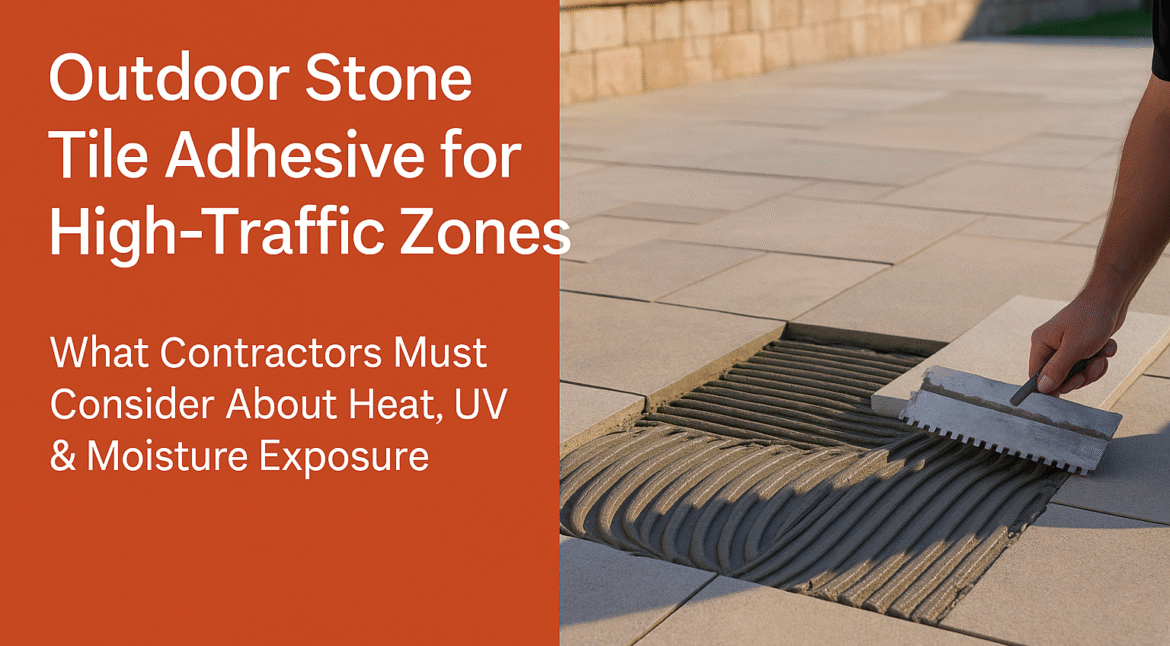
Outdoor Stone Tile Adhesive for High-Traffic Zones: What Contractors Must Consider About Heat, UV & Moisture Exposure Outdoor stone installations require more than good craftsmanship. They demand materials capable of handling some of the harshest environmental conditions—direct sunlight, heavy rainfall, temperature swings, and continuous foot movement. Whether it’s an exterior…

Tile Adhesive for Wet Floors: Bathrooms, Changing Rooms & Poolside Decking Wet areas such as bathrooms, changing rooms, and poolside decks need more than just strong tiles—they need reliable bonding materials that can handle moisture, constant foot movement, and frequent temperature changes. Choosing the right tile adhesive for wet floors…
Wall Tile Adhesive for Curved Surfaces: Domes, Arches & Pillar Cladding Introduction Curved architectural surfaces such as domes, arches, rounded columns, and pillar cladding present bonding challenges that differ significantly from flat wall installations. The curvature changes the way tiles sit, the way adhesive spreads, and the way load is…
Outdoor Tile Adhesive Requirements for Sun-Exposed, Heat-Prone & Weather-Changing Areas Introduction Outdoor tiling looks simple, but the conditions it must withstand are far more demanding than interior applications. Surfaces exposed to direct sunlight, high temperatures, rain cycles, and seasonal movement require a tile adhesive formulated to withstand these stresses. Using…
Why Flexible Tile Adhesives Are Critical for RCC Structures and Dynamic Surfaces Introduction Reinforced Cement Concrete (RCC) forms the structural base for most modern buildings — from slabs and columns to decks and facades. However, RCC surfaces are never completely static. They experience minor but continuous movement due to temperature…
Choosing Tile Adhesive for High-Vibration Zones: Metro Stations, Airports, and Industrial Floors Introduction High-vibration areas such as metro stations, airports, and industrial floors place extreme mechanical stress on tiles. Continuous movement from trains, foot traffic, and equipment creates micro-shifts that weaken traditional cement-based adhesives over time. The result — cracked…
Selecting Wall Tile Adhesive for Gypsum, Plaster, and AAC Block Substrates Introduction Selecting the right wall tile adhesive goes far beyond choosing a brand or matching it to tile size. The real challenge lies in understanding the nature of the substrate — because each surface, whether it’s gypsum, plaster, or…
Stone Installation Challenges: Why Specialized Stone Tile Adhesive Prevents Staining and Debonding Installing natural stones such as marble, granite, and quartz gives spaces a premium and timeless appeal. But while these materials enhance aesthetics, they also bring serious installation challenges. Many projects in India experience stone discoloration, efflorescence, or tile…
How to Choose Tile Adhesive for Ultra-Large Format Slabs Under Indian Monsoon Exposure Tiling with ultra-large format slabs has become a major trend in Indian architecture. From luxury living rooms to commercial lobbies and exterior facades, these large tiles create a seamless, modern look. But installing them isn’t as simple…
Best Tile Adhesive for Builders vs. Homeowners: Understanding Different Site Needs When it comes to tiling, one of the biggest mistakes people make is thinking that all tile adhesives are the same. The truth is, the right adhesive can make or break a project—especially in India, where temperature, moisture, and…
Tile Adhesive Strategies for Large-Format & Slim Tiles in India: Avoid Cracks, Lippage & Debonding In the modern Indian construction landscape, large-format and slim tiles are redefining architectural aesthetics. From luxury residences to high-end commercial spaces, these tiles offer seamless finishes, fewer grout lines, and contemporary appeal. However, installing these…
Tile Adhesive for Rooftop & Terrace Installations: How to Handle Expansion, Drainage & UV Exposure Rooftop and terrace areas are among the most challenging surfaces in construction — extreme heat during the day, cool temperatures at night, continuous UV exposure, and frequent wetting from rain. These cycles of expansion, contraction,…