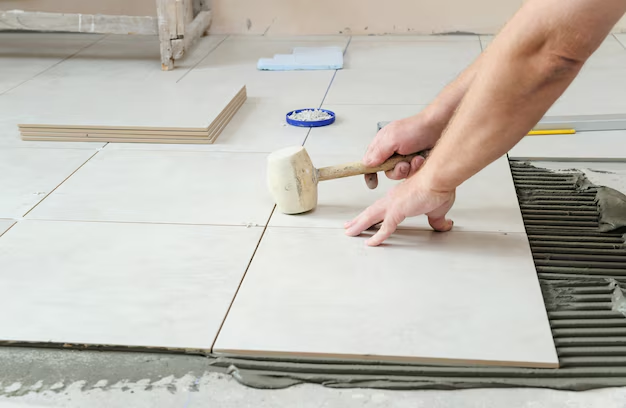


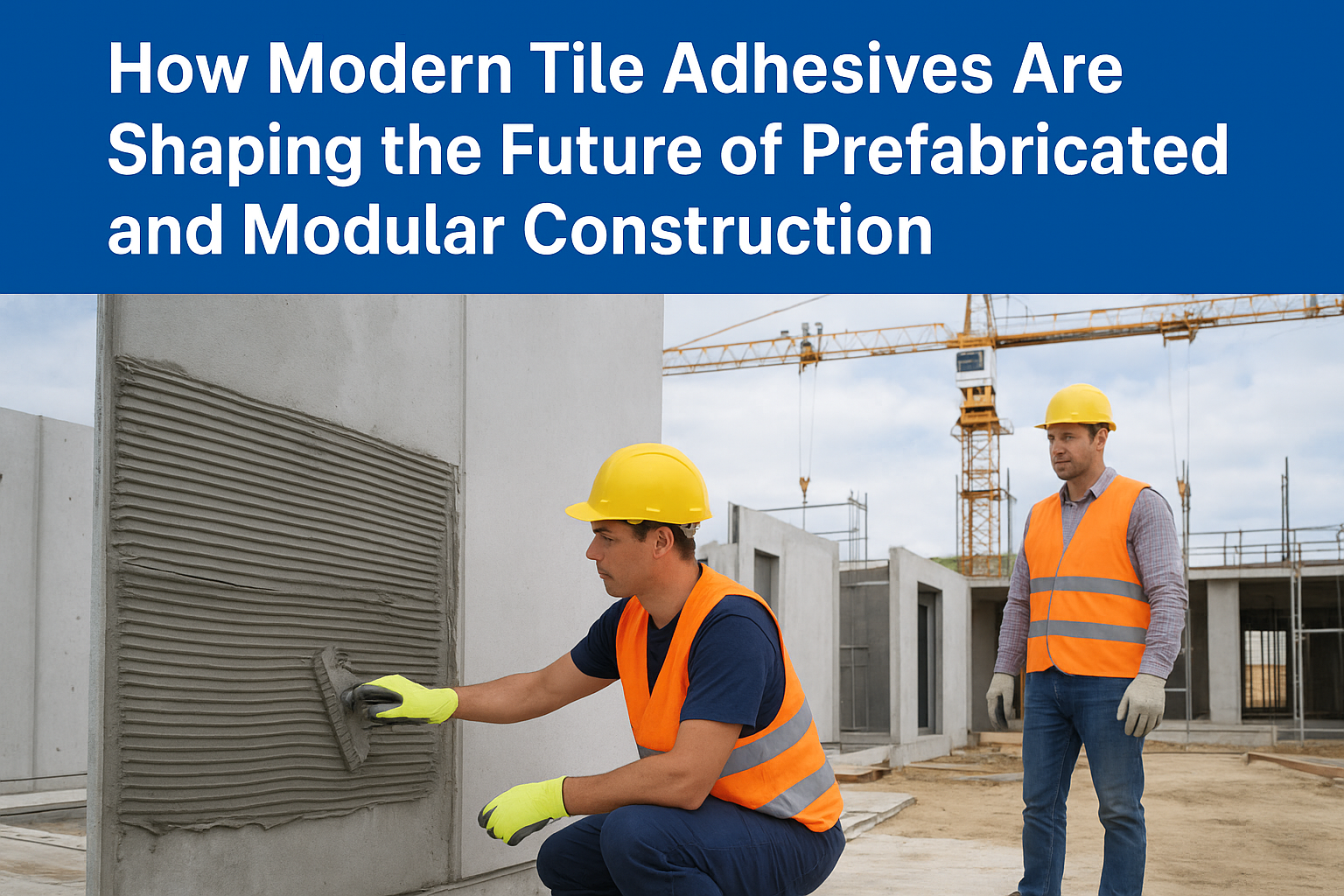
How Modern Tile Adhesives Are Shaping the Future of Prefabricated and Modular Construction The construction industry is rapidly evolving with the rise of prefabricated and modular construction. These methods prioritize speed, precision, and efficiency, allowing builders to assemble entire units or panels off-site before transporting them to the final location.…
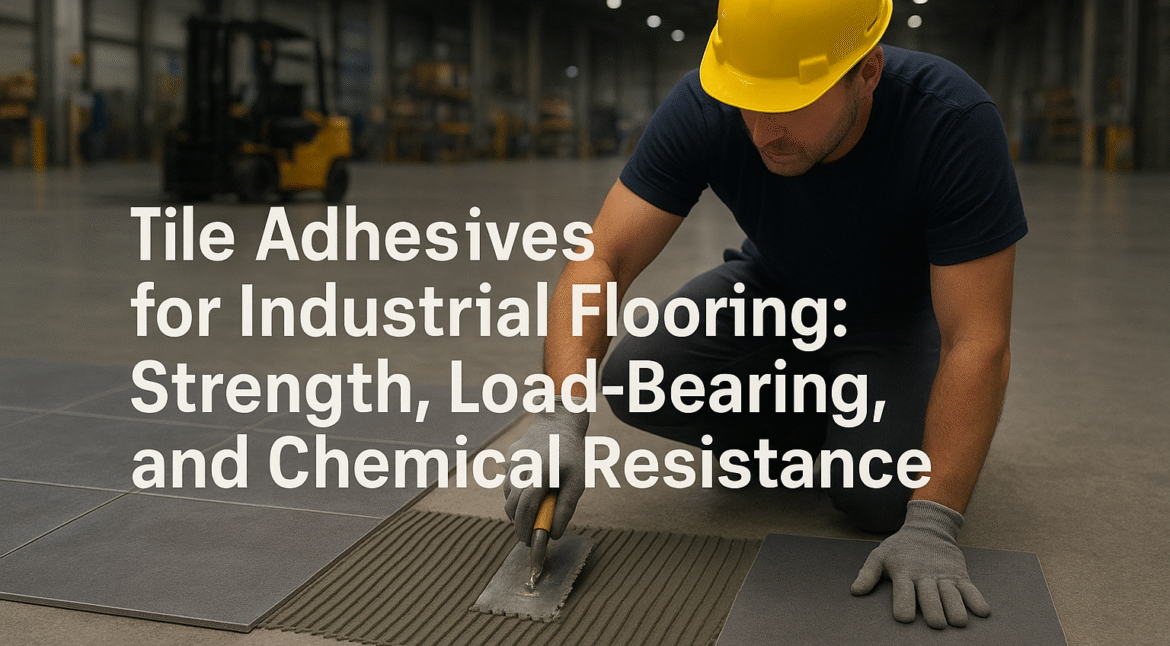
Tile Adhesives for Industrial Flooring: Strength, Load-Bearing, and Chemical Resistance Industrial floors face extreme demands due to heavy machinery, forklifts, and constant foot traffic, alongside exposure to oils, acids, and cleaning chemicals. Unlike residential or commercial floors, industrial environments require the right tile adhesives that combine high strength, chemical resistance,…
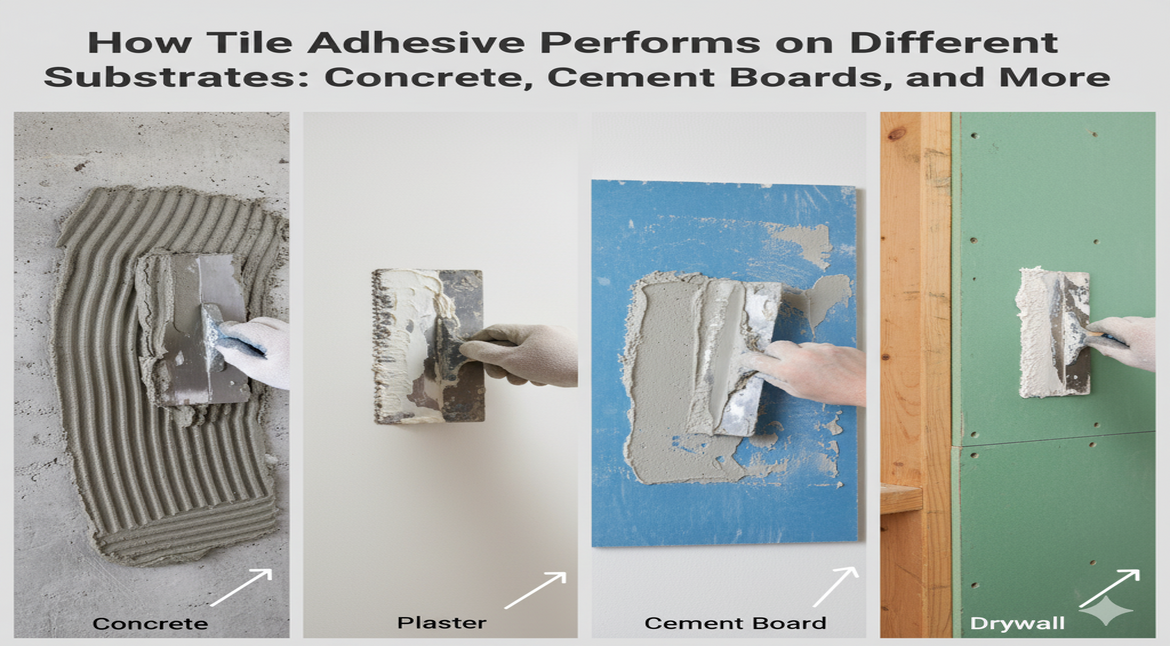
How Tile Adhesive Performs on Different Substrates: Concrete, Plaster, Cement Boards, and More Choosing the right tile adhesive is critical for ensuring strong, durable, and long-lasting tile installations. The performance of a tile adhesive largely depends on the type of substrate it is applied to. Different substrates, such as concrete,…
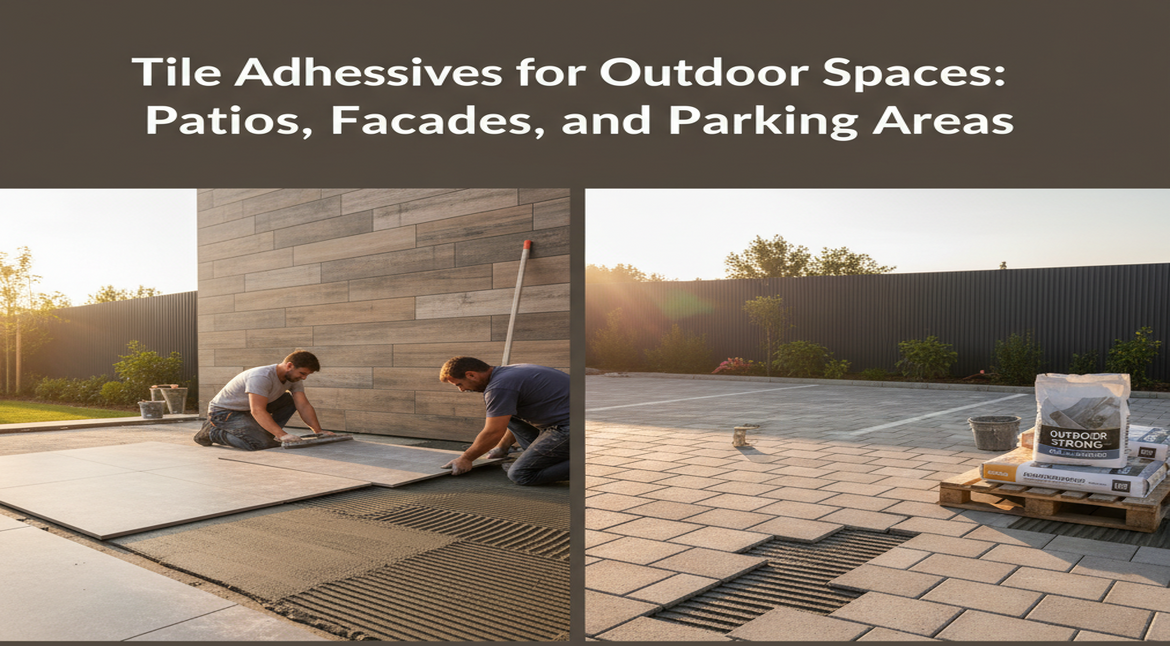
Tile Adhesives for Outdoor Spaces: Patios, Facades, and Parking Areas Outdoor tiling presents unique challenges compared to indoor applications. Sunlight, heavy rainfall, temperature fluctuations, and high traffic can compromise tile adhesion if the right tile adhesive is not used. Selecting the correct adhesive ensures long-lasting performance, prevents cracking or tile…
Best Tile Adhesive for Large-Format Tiles and Slabs in High-End Interiors Large-format tiles and slabs have become a defining feature of high-end interiors, offering sleek, seamless surfaces that elevate both residential and commercial spaces. From expansive living room floors to luxury bathroom walls and statement kitchen countertops, these tiles create…
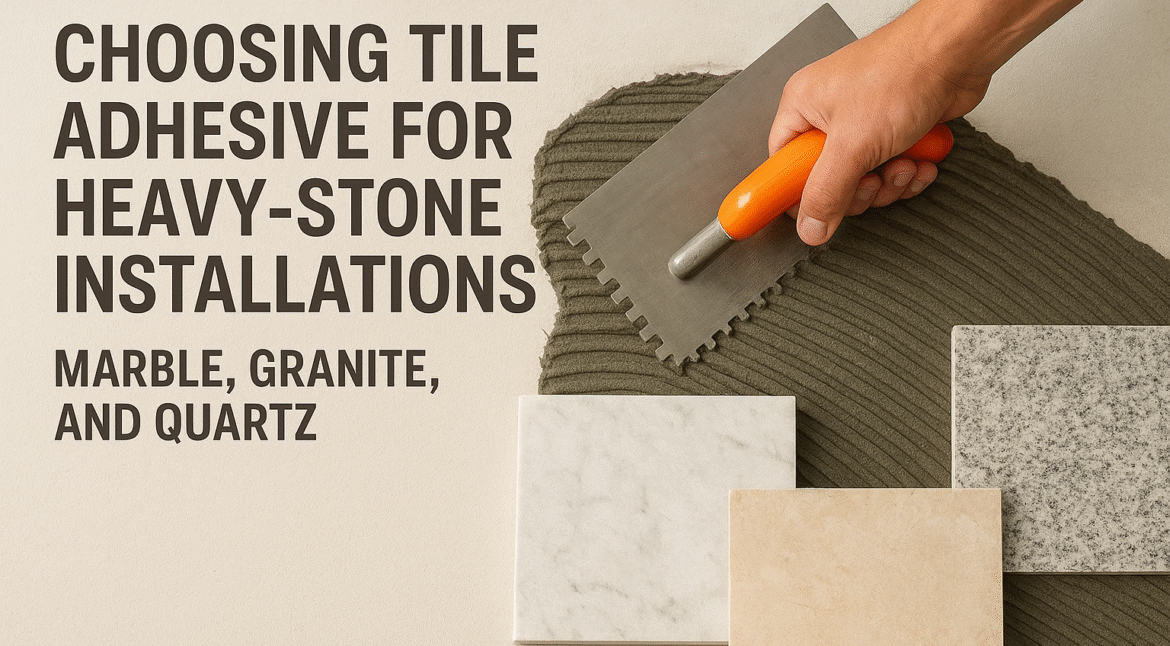
Choosing Tile Adhesive for Heavy-Stone Installations: Marble, Granite, and Quartz Installing heavy natural stones like marble, granite, and quartz requires more than just craftsmanship — it demands the right adhesive. Unlike lighter ceramic or vitrified tiles, these materials are dense, heavy, and often sensitive to moisture. Using the wrong mortar…
Choosing Tile Adhesive for High-Rise Construction: Wind, Load, and Vibration Considerations Yes, the selection of the appropriate tile adhesive is necessary in high-rise construction. Advanced solutions like polymer tile adhesive, epoxy tile adhesive, and PU-based adhesive are required to meet the demands of wind pressure, structural loads, and constant vibrations,…
The Role of Tile Adhesive in Seismic Zones: Flexibility and Crack Resistance Yes. The failure of tiles is common in seismic areas since the traditional cement mortar is not able to withstand the movements of the ground. Modern tile adhesive, particularly Polymer tile adhesive and PU based adhesive, is flexible…
Why Do Tiles Pop Off? Common Reasons and How Tile Adhesive Fixes Them The main causes of tiles cracking off include improper surface preparation, adhesive selection, area coverage, and movement and exposure to moist weather. This can be avoided most effectively by applying a high-performance tile adhesive, such as the…
Innovative Uses of Tile Adhesive in Modern Construction Beyond Flooring and Walls For years, tile adhesive was seen as a simple solution for fixing tiles on floors and walls. Builders often relied on cement mortar, but the results were inconsistent: weak bonding, hollow sounds beneath tiles, cracks, and water seepage.…
Why Polymer-Modified Tile Adhesives Are Becoming the Best Choice for Builders In modern construction, builders are demanding more than just strength—they need reliability, speed, and long-term durability in every material they choose. Traditional cement-sand mortar, once the go-to for tile installation, is now being replaced by polymer-modified tile adhesive, which…
From Ceramic to Porcelain: Which Tile Adhesive Works Best for Each Tile Type? Selecting the best tile adhesive is as important as choosing the tile itself. Ceramic and porcelain look similar, but they differ in density, porosity, and water absorption—factors that directly affect bonding. Using the wrong adhesive can lead…