


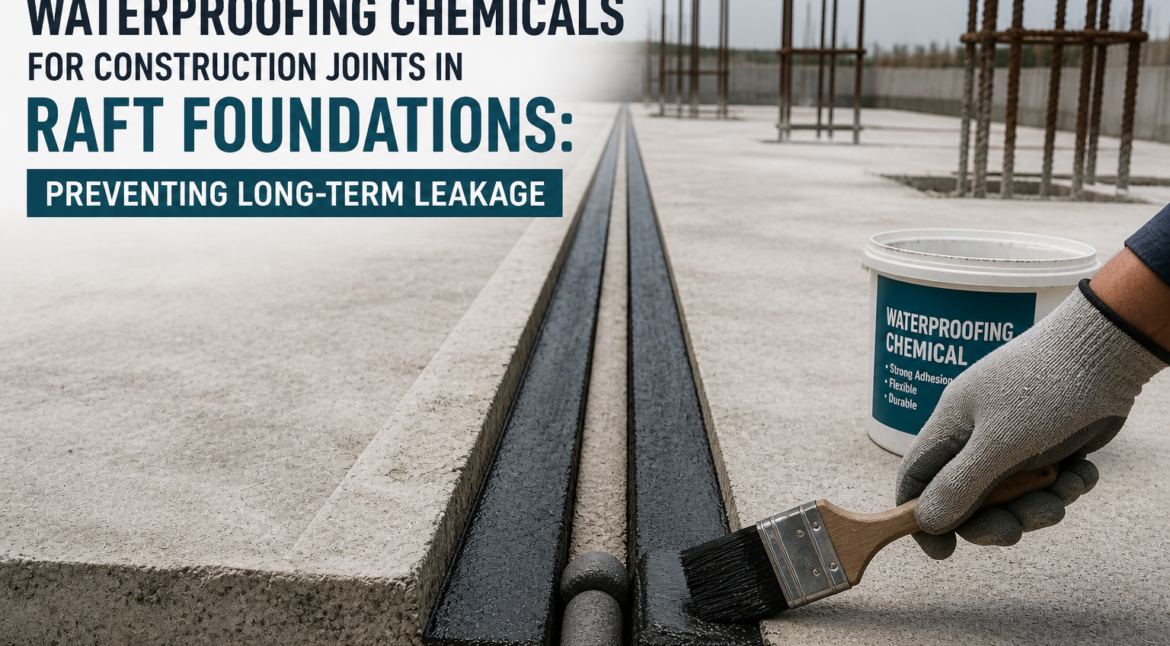
Waterproofing Chemicals for Construction Joints in Raft Foundations: Preventing Long-Term Leakage
Raft foundations are widely used in modern construction to distribute structural loads evenly across the soil. However, one of the most critical vulnerabilities in raft foundations is the construction joints. These joints, formed due to staged concrete pouring, often become weak points where water ingress begins.
Over time, even minor seepage through these joints can lead to serious structural and durability issues. This is why selecting the right waterproofing chemicals is essential to ensure long-term protection and performance.
Proper waterproofing at construction joints is not just a precaution; it is a necessity to prevent future leakage problems.
Common Question Asked:
Q.1 Can construction joints in raft foundations cause leakage?
Yes, construction joints are one of the most common sources of leakage in raft foundations if not properly treated and waterproofed.
Why Construction Joints Are Vulnerable
Construction joints are formed when concrete placement is stopped and resumed later. Even with proper bonding, these joints create a plane of weakness.
Common issues at joints include:
- incomplete bonding between layers
- micro gaps or capillary pathways
- differential shrinkage
- poor surface preparation
These conditions allow water to penetrate under hydrostatic pressure.
Types of Leakage in Raft Foundations
1. Seepage Through Joints
Water gradually enters through poorly sealed joints and spreads within the structure.
2. Capillary Water Movement
Even without visible cracks, water can travel through pores and microchannels.
3. Pressure-Driven Leakage
In basements or underground structures, hydrostatic pressure forces water through joints over time.
Role of Waterproofing Chemicals in Joint Protection
Modern waterproofing systems address leakage through different mechanisms, such as surface sealing and internal pore blocking.
Crystalline Waterproofing for Internal Sealing
Crystalline waterproofing is highly effective for raft foundations because it works from within the concrete.
It reacts with moisture to form crystals that:
- block capillary pores
- seal microcracks
- prevent water penetration
A product like POLYCOTE CWP helps enhance internal waterproofing by sealing pathways where water could otherwise travel.
This makes it particularly useful for long-term durability in water-retaining or underground structures.
Liquid Membrane Waterproofing for Surface Protection
For external and exposed surfaces, liquid membrane waterproofing provides a continuous protective layer.
These coatings:
- form a seamless barrier
- prevent water ingress from outside
- accommodate minor surface movement
Products such as SUPERKOT are used to create protective coatings over concrete surfaces.
For enhanced flexibility and durability, SUPERKOT N performs better in areas with movement or temperature variation.
Why Waterproofing at Construction Joints Is Critical
Ignoring joint waterproofing can lead to:
- continuous leakage
- reinforcement corrosion
- structural weakening
- high maintenance costs
Once leakage starts, repairs become more difficult and expensive.
How Waterproofing Chemicals Prevent Leakage
1. Blocking Water Pathways
Crystalline systems seal internal pores and microcracks, preventing water movement.
2. Creating Surface Barriers
Liquid membranes protect external surfaces from water penetration.
3. Improving Durability
Waterproofing chemicals reduce permeability and increase resistance to environmental stress.
Common Mistakes in Joint Waterproofing
Poor Surface Preparation
Dust, laitance, and loose particles reduce bonding effectiveness.
Incomplete Joint Treatment
Ignoring joint areas or applying inconsistent coating leads to weak spots.
Using Single-System Approach
Relying on only one type of waterproofing may not provide complete protection.
Improper Application Thickness
Thin or uneven coatings reduce effectiveness.
Best Practices for Waterproofing Construction Joints
Clean and Prepare the Surface
Remove all contaminants and ensure proper bonding conditions.
Treat Joints Before Waterproofing
Seal visible gaps and ensure continuity across joints.
Use Combined Systems
A combination of crystalline waterproofing and membrane coating provides better protection.
Follow Application Guidelines
Apply recommended thickness and curing procedures.
Ensure Proper Curing
Curing is essential for achieving full performance of waterproofing systems.
Why Product Selection Matters
Not all waterproofing systems perform equally in raft foundations.
Selecting the right combination ensures:
- long-term leakage prevention
- improved durability
- reduced maintenance
Products like POLYCOTE CWP, SUPERKOT, and SUPERKOT N are designed to address both internal and external waterproofing needs.
Conclusion
Construction joints are one of the most critical points of vulnerability in raft foundations. Without proper treatment, they can lead to long-term leakage and structural damage.
Using the right waterproofing chemicals, including crystalline and liquid membrane systems, helps protect these joints effectively. When combined with proper surface preparation and application practices, these solutions ensure durable, leak-free performance.
A well-planned waterproofing system is essential to maintain the integrity and lifespan of raft foundations. For more information, Contact Us.
FAQs
-
1. Why do construction joints leak in raft foundations?
They create weak points where water can penetrate due to incomplete bonding or micro gaps.
-
2. What is the best waterproofing method for joints?
A combination of crystalline waterproofing and liquid membrane systems provides effective protection.
-
3. Can waterproofing chemicals stop long-term leakage?
Yes, when applied correctly, they prevent water ingress and improve durability.
-
4. Is surface preparation important before waterproofing?
Yes, proper surface preparation ensures effective bonding and performance.
-
5. What happens if joints are not waterproofed?
Leakage can occur, leading to structural damage and costly repairs.