


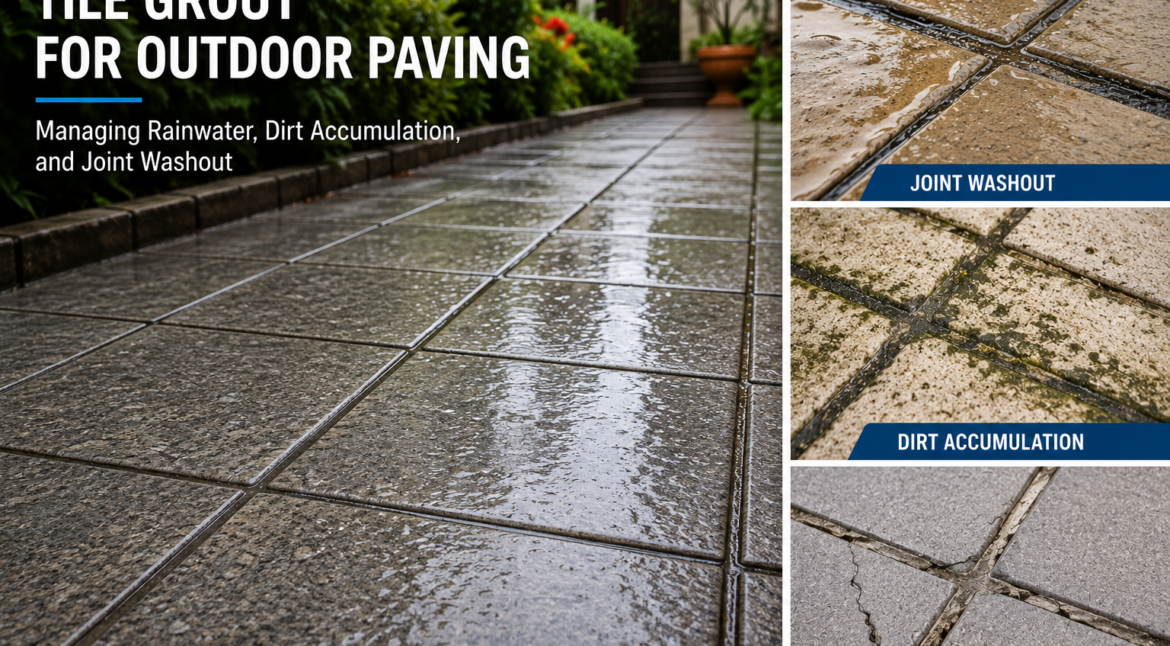
Tile Grout for Outdoor Paving: Managing Rainwater, Dirt Accumulation, and Joint Washout
Outdoor paving areas are constantly exposed to harsh environmental conditions. Unlike indoor tiled surfaces, pavements, walkways, terraces, and landscape areas face continuous rainwater exposure, temperature variation, dirt accumulation, and surface movement. These conditions place significant stress on tile joints.
One of the most common problems in outdoor tiled surfaces is grout deterioration. Over time, joints may crack, wash out, discolor, or weaken due to water penetration and environmental exposure. In many cases, the issue is not the tile itself but the wrong selection or application of tile grout.
Proper grout selection plays a major role in maintaining joint stability, appearance, and long-term durability in outdoor paving systems.
Common Question Asked:
Q.1 Why does outdoor tile grout wash out during rain?
Outdoor tile grout fails mainly due to water exposure, improper joint filling, poor grout selection, and movement stress caused by weather conditions.
Why Outdoor Tile Joints Are More Vulnerable
Outdoor paving is exposed to conditions that are far more demanding than indoor tiled surfaces.
These include:
- continuous rainwater exposure
- standing water accumulation
- thermal expansion and contraction
- dirt and debris buildup
- foot traffic and surface vibration
Over time, these factors weaken grout joints if the wrong material or application method is used.
Common Problems in Outdoor Tile Grout
1. Joint Washout During Rain
Heavy rainfall gradually erodes weak grout joints.
This happens when:
- grout absorbs excess water
- bonding strength is poor
- joints are not filled properly
As erosion progresses, gaps form between tiles and water penetration increases.
2. Dirt Accumulation in Joints
Outdoor surfaces collect:
- dust
- mud
- organic debris
- pollutants
Porous grout surfaces absorb dirt easily, causing darkened and uneven joints.
3. Cracking Due to Thermal Movement
Outdoor paving expands and contracts continuously due to sunlight and temperature changes.
Rigid or weak grout joints crack under movement stress.
4. Water Penetration Below Tiles
Damaged grout allows water to seep below tiles, leading to:
- hollow sound
- tile loosening
- substrate damage
Role of Tile Grout in Outdoor Paving
The main function of tile grout is not just filling gaps between tiles. It also:
- stabilizes tile edges
- distributes movement stress
- reduces water penetration
- improves overall durability
In outdoor applications, grout performance becomes critical because joints remain exposed directly to environmental conditions.
Cement Tile Grout for Outdoor Applications
Cement tile grout is commonly used in exterior paving because it is easy to apply and economical for larger areas.
Products like Redwop’s Tile Grout are used to fill joints between outdoor paving tiles while improving surface appearance and joint stability.
Cementitious grout systems are suitable for:
- walkways
- balconies
- terraces
- landscape paving
However, their long-term performance depends heavily on:
- correct joint width
- proper curing
- water resistance
- installation quality
Challenges with Cement Grout in Outdoor Conditions
Standard cement grout can face issues such as:
- water absorption
- surface erosion
- staining
- cracking under movement
Without proper protection, rainwater gradually weakens the joint surface.
This is why higher-performance grout systems may be needed in demanding outdoor areas.
Epoxy Tile Grout for Better Durability
In areas exposed to heavy moisture or frequent cleaning, epoxy tile grout provides stronger performance compared to standard cement grout.
Epoxy grout systems offer:
- lower water absorption
- higher strength
- better stain resistance
- improved durability under outdoor exposure
Products such as:
are suitable for areas where:
- Water resistance is important
- Joint durability is critical
- A decorative finish is required
Why Waterproof Tile Grout Matters Outdoors
Outdoor paving remains exposed to water throughout its service life.
Using a waterproof tile grout system helps:
- reduce water penetration
- improve joint durability
- prevent erosion and washout
- minimize staining and dirt absorption
Water-resistant grout systems perform better in:
- terraces
- pool decks
- exposed balconies
- external walkways
How Rainwater Causes Joint Failure
Rainwater affects grout performance in several ways:
Water Absorption
Porous grout absorbs moisture repeatedly.
Expansion and Shrinkage
Continuous wet-dry cycles weaken the grout structure.
Surface Erosion
Flowing rainwater slowly removes weak grout particles.
Substrate Movement
Moisture affects the substrate beneath tiles, increasing movement stress.
Common Site Mistakes That Lead to Grout Failure
Incorrect Joint Width
Very narrow or excessively wide joints reduce grout performance.
Improper Mixing Ratio
Excess water weakens grout strength and increases shrinkage.
Inadequate Joint Cleaning
Dust or debris inside joints reduces bonding.
Poor Curing Practices
Rapid drying weakens cement-based grout.
Using Interior Grout Outdoors
Indoor grout systems may not tolerate weather exposure effectively.
Best Practices for Outdoor Tile Grouting
Select the Right Grout Type
Use grout suitable for exterior exposure and movement conditions.
Maintain Proper Joint Width
Allow sufficient space for movement accommodation.
Ensure Full Joint Filling
Avoid voids or shallow joints.
Protect During Initial Curing
Prevent early rain exposure before grout gains strength.
Clean Excess Material Properly
Avoid surface staining after application.
Why Grout Selection Matters in Outdoor Paving
Grout joints are often the first point of failure in outdoor tiled surfaces.
Selecting the correct grout system helps:
- improve durability
- reduce maintenance
- prevent leakage below tiles
- maintain surface appearance
Using the right tile grout system significantly improves long-term paving performance.
Conclusion
Outdoor paving surfaces experience continuous exposure to rainwater, dirt accumulation, and thermal movement, making grout performance critical for durability and appearance.
While cement tile grout remains widely used for general outdoor applications, high-performance epoxy tile grout systems provide better resistance to water absorption, staining, and joint deterioration.
Products like Tile Grout, EPTILE GROUT, and decorative epoxy grout systems help improve joint stability and long-term outdoor performance.
When combined with proper installation practices and correct joint design, the right grout system helps prevent washout, leakage, and premature tile failure. For more information, Contact Us.
FAQs
-
1. Why does outdoor tile grout wash out during rain?
Washout occurs due to water erosion, poor bonding, and weak grout structure.
-
2. Is cement tile grout suitable for outdoor paving?
Yes, but it requires proper installation and protection against water exposure.
-
3. What is the advantage of epoxy tile grout outdoors?
Epoxy grout provides better water resistance, strength, and stain protection.
-
4. Why do outdoor grout joints crack?
Cracking occurs due to thermal movement, shrinkage, and improper joint design.
-
5. Can waterproof tile grout prevent leakage?
It helps reduce water penetration and improves long-term joint durability.