


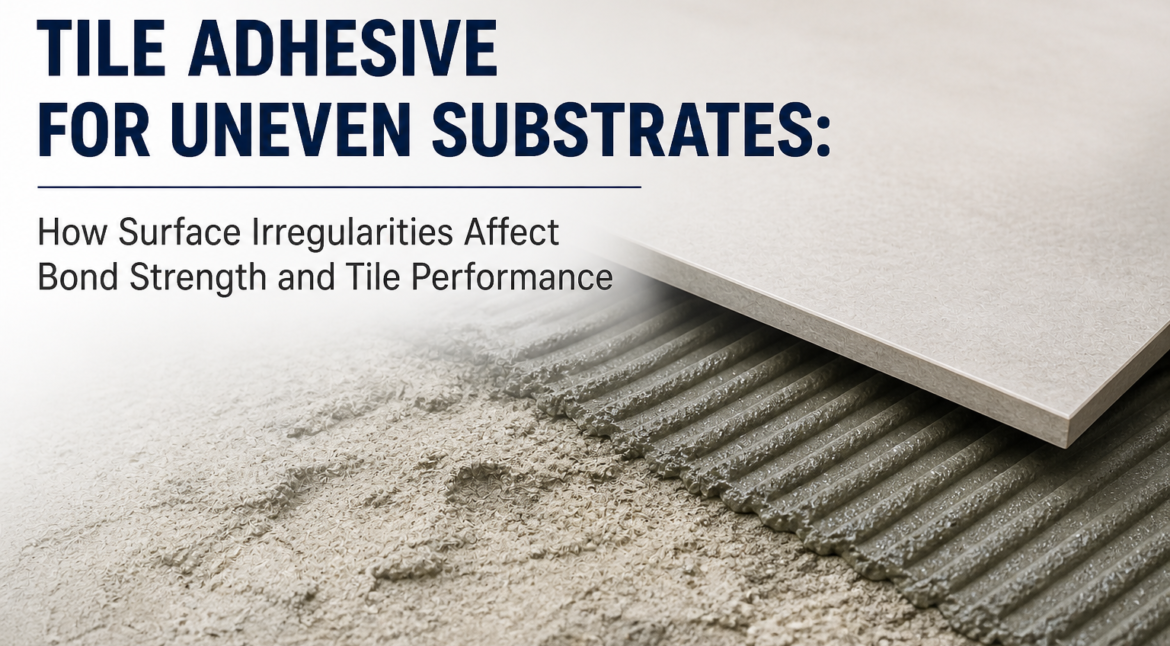
Tile Adhesive for Uneven Substrates: How Surface Irregularities Affect Bond Strength and Tile Performance
Tile installation performance depends heavily on substrate condition. One of the most common on-site issues is tiling over uneven or poorly prepared surfaces. Even high-quality tiles can fail if the base is not properly leveled.
Using the right tile adhesive helps improve bonding, but it cannot fully compensate for major surface irregularities. Uneven substrates affect adhesive thickness, contact area, and long-term durability.
Common Question Asked:
Q.1 Can tile adhesive fix uneven surfaces during installation?
No, tile adhesive can handle minor undulations, but proper surface leveling is essential for long-term performance.
What Are Uneven Substrates in Tiling?
Uneven substrates include:
- rough concrete surfaces
- patched or repaired areas
- undulated screeds
- uneven plaster finishes
These create inconsistent contact between tile and adhesive, leading to performance issues.
How Uneven Surfaces Affect Tile Adhesive Performance
1. Uneven Adhesive Bed Thickness
On irregular surfaces:
- some areas get thin adhesive
- others require thick buildup
This imbalance causes stress concentration and weak bonding zones.
2. Hollow Voids and Weak Bonding
Uneven substrates often lead to incomplete contact, creating voids beneath tiles.
This results in:
- hollow sound
- reduced load-bearing capacity
- increased breakage risk
3. Tile Lippage and Alignment Issues
Even slight undulations can cause tiles to sit unevenly, leading to visible lippage and poor finishing quality.
4. Long-Term Debonding Risk
Uneven load distribution weakens the bond over time, especially in high-traffic or external areas.
Role of Tile Adhesive in Managing Minor Irregularities
Polymer Tile Adhesive for Better Bond Strength
Polymer tile adhesive offers improved flexibility and bonding, making it suitable for slightly uneven substrates.
- Teratile Silver is suitable for standard applications with improved bonding performance
- Teratile Gold provides enhanced strength for more demanding conditions
- Teratile Diamond is designed for high-performance applications, including large tiles and external use
These products help improve adhesion, but still require proper surface preparation.
Floor Tile Adhesive for Load Distribution
For flooring applications, selecting the right adhesive is critical.
Products such as:
are used to ensure proper load distribution and reduce stress on tiles.
However, uneven surfaces can still create point loading, which adhesives alone cannot resolve.
Wall Tile Adhesive for Vertical Stability
On walls, uneven substrates increase the risk of tile slippage.
Solutions like:
- Teratile Classic for basic applications
- Teratile Platinum for improved bonding and performance
help provide better grip and stability during installation.
High-Performance Adhesives for Challenging Conditions
For difficult substrates or large-format tiles:
offer advanced bonding, flexibility, and coverage, making them suitable for complex site conditions.
Why Increasing Adhesive Thickness Is a Mistake
A common site practice is to compensate for unevenness by applying thicker adhesive layers.
This leads to:
- improper curing
- shrinkage
- reduced bond strength
- tile cracking
Tile adhesive is designed for thin-bed application, not for leveling.
Best Practices for Tiling on Uneven Substrates
1. Level the Surface First
Use screed or leveling compounds before tiling.
2. Clean the Substrate Properly
Remove dust, loose particles, and contaminants.
3. Choose the Right Adhesive
Match adhesive type with tile size, surface condition, and application area.
4. Ensure Full Coverage
Use proper troweling techniques to avoid voids.
5. Avoid Excess Water or Overworking
Maintain correct mix consistency for optimal bonding.
When Adhesive Cannot Solve the Problem
Tile adhesive cannot compensate for:
- major level differences
- weak or damaged substrates
- structural surface issues
Proper substrate preparation is always required before tiling.
Conclusion
Uneven substrates are one of the leading causes of tile failure. While modern tile adhesive systems improve bonding and flexibility, they cannot replace proper surface preparation.
Using the right adhesive, from standard solutions to high-performance polymer systems, combined with correct leveling practices, ensures durable and defect-free tile installation.
Ignoring substrate conditions may save time initially, but it leads to long-term failures and higher repair costs. For more information, Contact Us.
FAQs
-
1. Can tile adhesive be used to level floors?
No, it is designed for bonding, not leveling.
-
2. What causes hollow sound in tiles?
Voids due to uneven substrate or improper adhesive application.
-
3. Which adhesive is best for uneven surfaces?
Polymer-modified adhesives perform better for minor irregularities.
-
4. Why do tiles crack on uneven surfaces?
Due to uneven load distribution and weak bonding zones.
-
5. Is surface preparation necessary?
Yes, it is critical for long-term tile performance.