

Narmada Canal Lining and Repairing Works With Mattcem RPL
On This Page
- The canal lining project context
- Identify the repair requirement and substrate
- MATTCEM RPL: source-grounded product context
- Planning surface preparation and placement
- Checks before claiming project performance
- Canal repair planning table
- Redwop MATTCEM product information
- Questions on lining repair scope
- Enquiry package for canal repair materials
- Final Thoughts
The canal lining project context
Canal lining repairs involve hydraulic exposure, existing concrete condition and the operational limits of the water channel. A project case study must distinguish documented Redwop involvement from general repair practice.
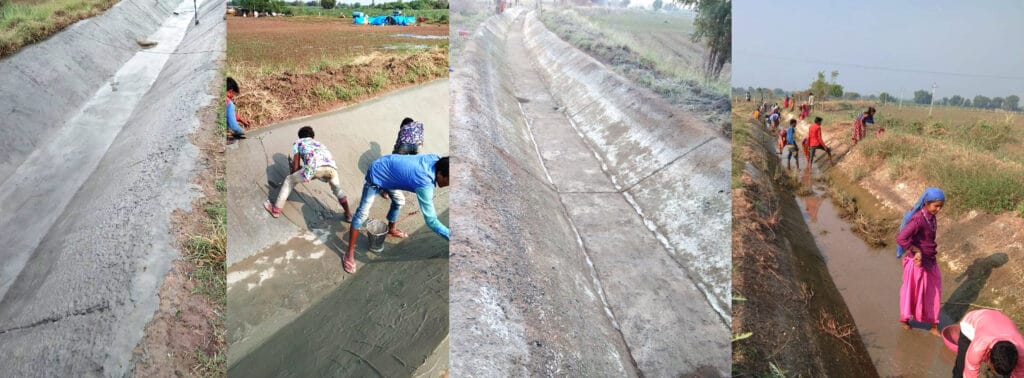
Redwop’s published Narmada canal article identifies MATTCEM RPL as a material used in canal lining and repairing work in Gujarat. This is an appropriate place to discuss that documented project, rather than inventing results or transferring its experience to unrelated products.
Identify the repair requirement and substrate
Inspect concrete cracking, delamination, joint defects, water flow and the ability to isolate the repair area. Determine whether rehabilitation is structural, protective or localised.
The published account describes surface preparation to remove efflorescence, laitance, dirt and loose material, followed by a prime and finishing coat of MATTCEM RPL. Its product literature describes a cement-and-polymer-based repair material intended to assist lining smoothness and limit seepage.
MATTCEM RPL: source-grounded product context
The existing Redwop article associates the Narmada canal lining and repair work with MATTCEM RPL. Refer to that article and the current published product documentation; do not add unverified project quantities or success claims.
A canal repair remains an engineering task. The condition of old concrete, water-control arrangements, shutdown window, repair depth, joints and curing must be established before material quantities and sequence are finalised. Do not promise zero seepage or universal suitability for every hydraulic structure.
Planning surface preparation and placement
A credible case-study update should state the documented problem and product role, explain surface preparation generally, and flag any unavailable construction details as unspecified.
Infrastructure purchasers should share defect maps, channel dimensions, existing-lining condition, hydraulic exposure and the available repair window. This allows an informed discussion of MATTCEM RPL and a current product method statement, without presenting the case study as a blanket performance warranty.
Checks before claiming project performance
Avoid invented project dates, treated areas, government approvals or measured performance results.
The most relevant preventable risks are outlined below. Their significance depends on the actual application and approved installation process.
Canal repair planning table
| Issue / condition | Technical approach | Buyer verification |
|---|---|---|
| Weak existing lining | Remove unsound material | Expose a sound prepared base |
| Active seepage during repair | Plan water management | Do not claim any mortar can resist every flow |
| Poor repair termination | Detail edges and joints | Use engineered repair sequence |
For this application, record deterioration depth and area; flowing versus shut-down water; soundness of old concrete. Before procurement, clarify the following actions: Obtain drawings, photos and repair specification; review MATTCEM product grade actually intended; confirm compatibility and curing under site access. These are project information requirements, not promises that a selected product will satisfy every condition.
Redwop MATTCEM product information
Check the current official Redwop product information and the exact grade-level technical datasheet before publication or purchase:
https://www.redwop.net/narmada-canal-lining-and-repairing-works-with-mattcem-rpl/
MATTCEM RPL first-party technical brochure
Explore Redwop Official Product Directory →
Questions on lining repair scope
Does any cement repair mortar suit a canal?
No
What dimensions support quantity estimates?
Area, depth and repair thickness
Why must the canal operating window be known?
Access and curing depend on shutdown conditions.
What first-party evidence supports the canal case study?
Redwop’s own published Narmada canal article identifies MATTCEM RPL and describes the preparation and application stages.
Why does canal-lining repair require a site-specific method?
Hydraulic exposure, substrate condition, work access and service shutdown differ from ordinary building repairs and must be reviewed together.
What does Redwop’s MATTCEM RPL case information establish?
It documents a published project application. It does not by itself establish suitability for every canal, repair depth or water condition.
Why should repair thickness be confirmed?
Repair geometry determines material selection, application method and quantity; the approved product limits must be checked before ordering.
How should flowing-water conditions affect sequencing?
Water management and access must be planned so the repair is performed within the selected material’s permitted installation conditions.
What records help evaluate a canal repair trial?
Document substrate preparation, repair dimensions, product batch, placing conditions, curing protection and the agreed acceptance inspection.
What should an infrastructure procurement enquiry provide?
Include condition-survey drawings, repair area and depth, water exposure, shutdown duration, access restrictions and relevant Redwop reference requirements.
Enquiry package for canal repair materials
For canal projects, send marked-up defect drawings, the canal operating or shutdown window, repair thicknesses and hydraulic conditions. Ask Redwop for the latest MATTCEM RPL literature and an approved method statement for the identified substrate and repair scope.
Final Thoughts
The Narmada canal project illustrates why repair materials must be evaluated in relation to the damaged structure and the actual service environment. Canal lining repairs face water exposure, access constraints and substrate conditions that cannot be reduced to a generic mortar choice. MATTCEM RPL should be discussed in the context of Redwop’s published project information, while new work requires its own engineering assessment and product verification. Buyers considering comparable rehabilitation projects should provide the defect description, lining condition, quantities and construction constraints rather than assume identical results across sites.