


Floor Tile Adhesive for Heavy Trolleys, Wheel Loads & Rolling Pressure: A Guide for Industrial & Hypermarket Floors Industrial floors, retail hypermarkets, logistics warehouses, and large commercial shopping areas face a common challenge is continuous rolling loads. Heavy trolleys, stocking carts, pallet dollies, warehouse equipment, and thousands of footsteps moving…

Outdoor Tile Adhesive for Sun-Exposed Staircases & Ramps: Heat, Slippage & Safety Considerations Outdoor staircases and ramps face harsher conditions than almost any other tiled surface. Direct sun exposure, steep incline angles, continuous foot pressure, and sudden weather changes all place significant stress on the tile system. If the adhesive…
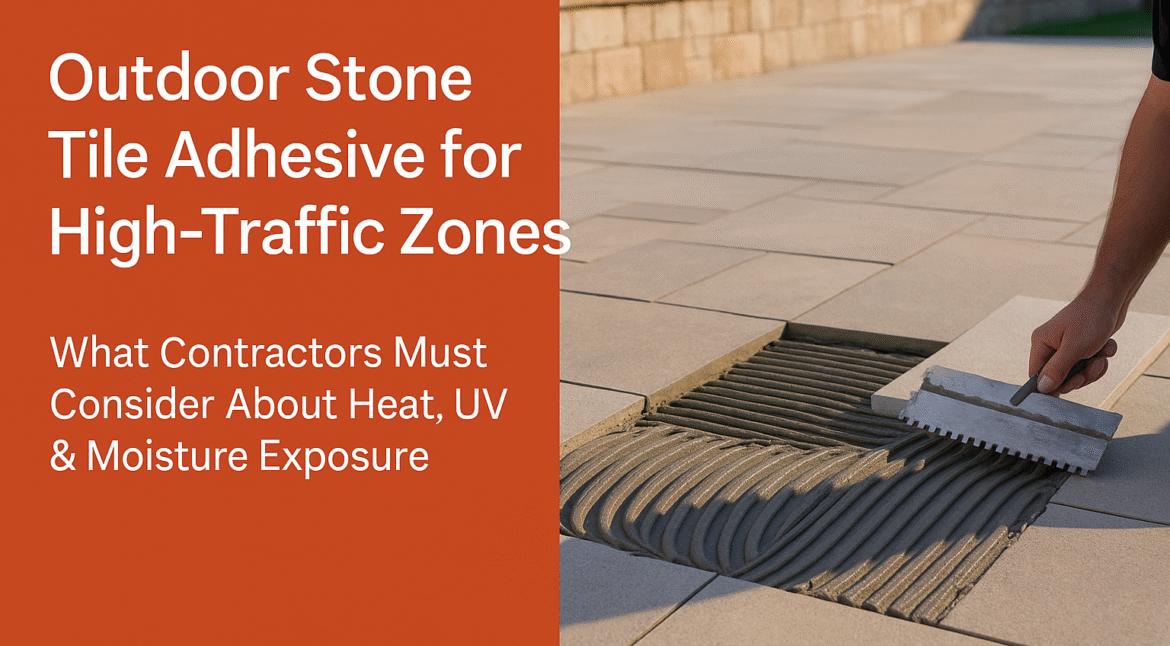
Outdoor stone paving is exposed to moisture, temperature movement and concentrated traffic. An appropriate setting system must account for the stone and supporting base as well as the adhesive. This updated guide stays focused on the topic of the existing Redwop article and is intended for specifiers, contractors and project…
Tile Adhesive for Wet Floors: Bathrooms, Changing Rooms & Poolside Decking Wet areas such as bathrooms, changing rooms, and poolside decks need more than just strong tiles—they need reliable bonding materials that can handle moisture, constant foot movement, and frequent temperature changes. Choosing the right tile adhesive for wet floors…
Wall Tile Adhesive for Curved Surfaces: Domes, Arches & Pillar Cladding Introduction Curved architectural surfaces such as domes, arches, rounded columns, and pillar cladding present bonding challenges that differ significantly from flat wall installations. The curvature changes the way tiles sit, the way adhesive spreads, and the way load is…
Outdoor Tile Adhesive Requirements for Sun-Exposed, Heat-Prone & Weather-Changing Areas Introduction Outdoor tiling looks simple, but the conditions it must withstand are far more demanding than interior applications. Surfaces exposed to direct sunlight, high temperatures, rain cycles, and seasonal movement require a tile adhesive formulated to withstand these stresses. Using…
Why Flexible Tile Adhesives Are Critical for RCC Structures and Dynamic Surfaces Introduction Reinforced Cement Concrete (RCC) forms the structural base for most modern buildings — from slabs and columns to decks and facades. However, RCC surfaces are never completely static. They experience minor but continuous movement due to temperature…
Choosing Tile Adhesive for High-Vibration Zones: Metro Stations, Airports, and Industrial Floors Introduction High-vibration areas such as metro stations, airports, and industrial floors place extreme mechanical stress on tiles. Continuous movement from trains, foot traffic, and equipment creates micro-shifts that weaken traditional cement-based adhesives over time. The result — cracked…
Ultra-large tile slabs amplify substrate and handling demands. A small contact problem under a large slab can affect a much greater area than it would under an ordinary tile. This updated guide stays focused on the topic of the existing Redwop article and is intended for specifiers, contractors and project…
Best Tile Adhesive for Builders vs. Homeowners: Understanding Different Site Needs When it comes to tiling, one of the biggest mistakes people make is thinking that all tile adhesives are the same. The truth is, the right adhesive can make or break a project—especially in India, where temperature, moisture, and…
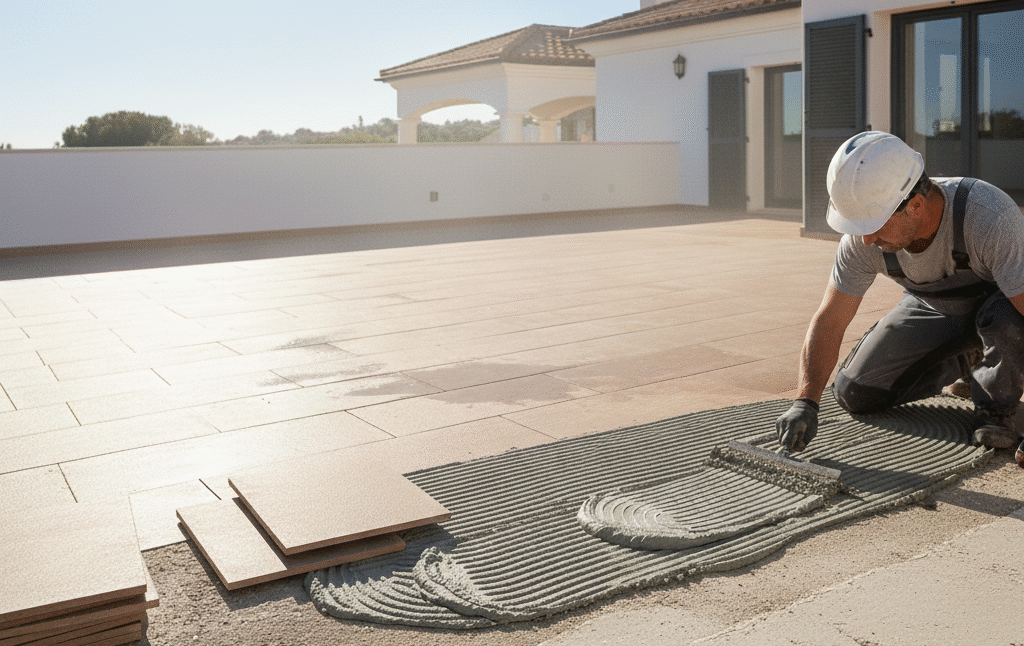
Tile Adhesive for Rooftop & Terrace Installations: How to Handle Expansion, Drainage & UV Exposure Rooftop and terrace areas are among the most challenging surfaces in construction — extreme heat during the day, cool temperatures at night, continuous UV exposure, and frequent wetting from rain. These cycles of expansion, contraction,…
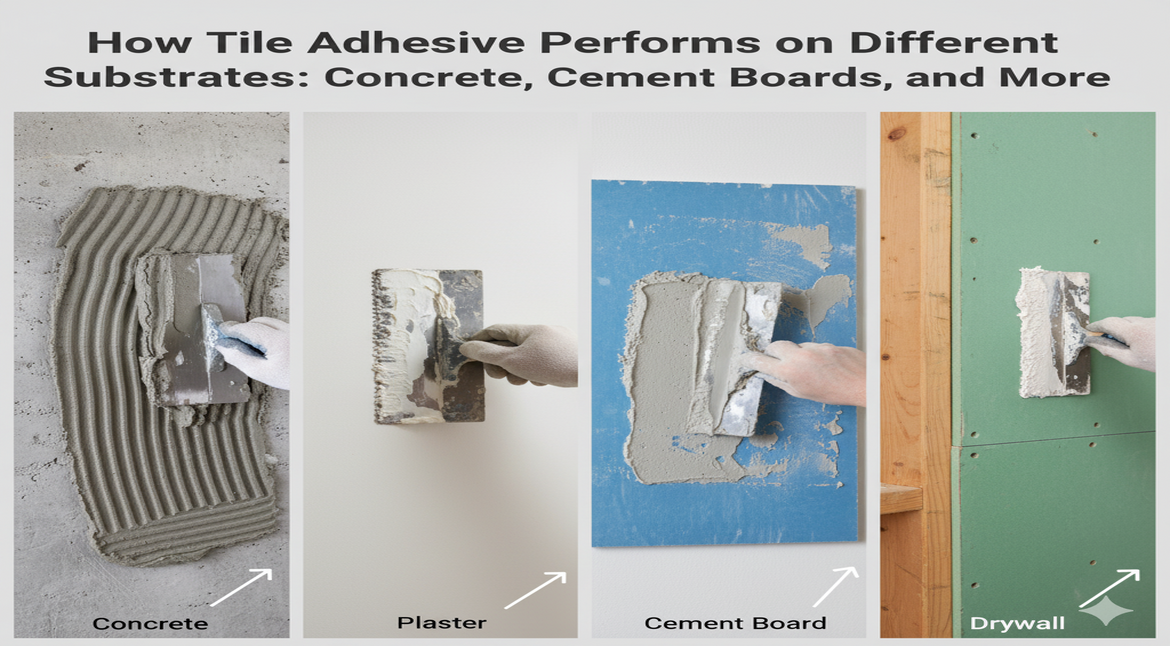
How Tile Adhesive Performs on Different Substrates: Concrete, Plaster, Cement Boards, and More Choosing the right tile adhesive is critical for ensuring strong, durable, and long-lasting tile installations. The performance of a tile adhesive largely depends on the type of substrate it is applied to. Different substrates, such as concrete,…