


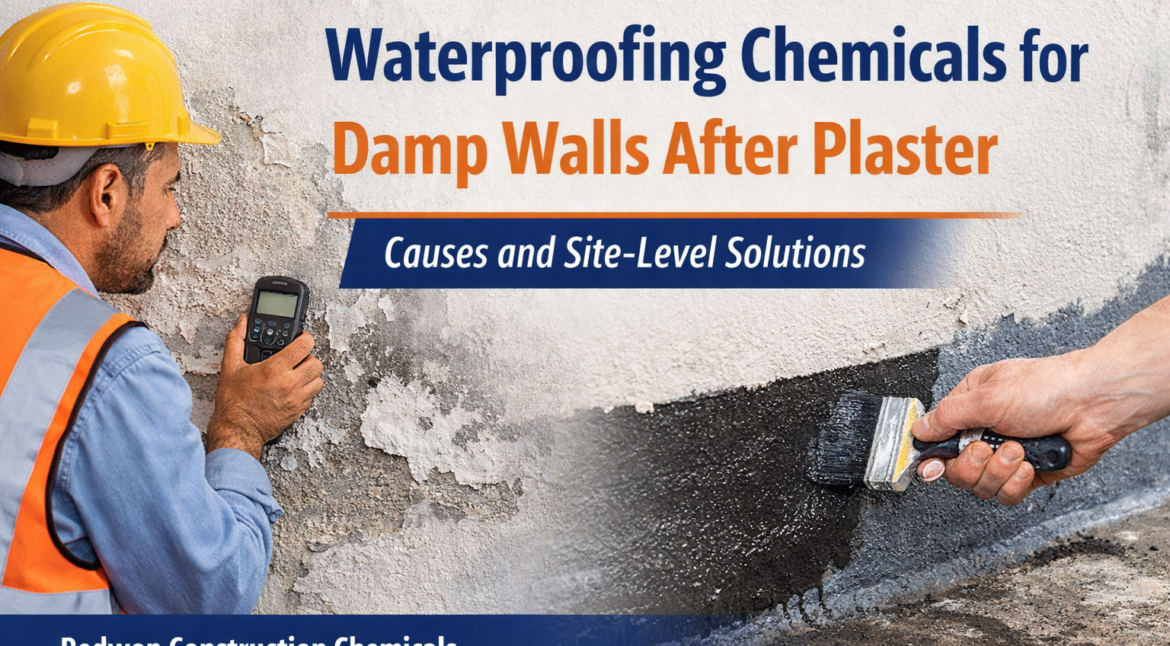
Waterproofing Chemicals for Damp Walls After Plaster: Causes and Site-Level Solutions
Damp walls after plastering are one of the most frustrating problems in construction. A wall may appear perfectly finished initially, but within weeks or months, signs of dampness begin to appear. These include paint peeling, surface discoloration, salt deposits, and even fungal growth.
In most cases, the problem is not the plaster itself but the lack of proper moisture control within the wall system. This is where waterproofing chemicals become essential. They help control moisture ingress, improve durability, and protect wall finishes from long-term damage.
Understanding the root causes of damp walls and applying the right waterproofing system at the right stage is critical to achieving long-lasting results.
Common Question Asked:
Q.1 Can waterproofing chemicals stop dampness in walls after plastering?
Yes, when applied correctly, waterproofing chemicals can control moisture ingress and prevent dampness from affecting plaster and paint finishes.
Why Damp Walls Appear After Plastering
Dampness is not a single problem, it is usually caused by multiple factors working together.
1. Moisture Retained in Plaster
Fresh plaster contains a significant amount of water. If finishing layers are applied before this moisture evaporates, it remains trapped inside the wall.
Over time, this moisture migrates outward and causes visible damp patches.
2. External Water Ingress
Walls exposed to rain are highly vulnerable. Cracks, joints, and porous surfaces allow water to seep into the structure.
Without proper waterproofing protection, moisture can travel through the wall and appear on interior surfaces.
3. Capillary Action in Masonry
Bricks and concrete naturally absorb water through capillary pores. This moisture moves upward or sideways within the wall system.
This is one of the most common causes of dampness in ground-level walls.
4. Poor Construction Practices
Common site mistakes include:
- No waterproofing layer before plaster
- Inadequate curing
- Poor surface preparation
- Use of low-quality materials
These factors significantly increase the risk of damp walls.
Role of Waterproofing Chemicals in Damp Wall Protection
Modern waterproofing chemicals are designed to prevent water from entering or moving through wall systems. Depending on the application, different types of waterproofing technologies are used.
Liquid Membrane Waterproofing for Surface Protection
One of the most effective solutions for exposed walls and terraces is liquid membrane waterproofing. These systems form a seamless coating over the surface, preventing water from entering the structure.
Liquid membranes are especially useful for exterior walls where rain exposure is high. They create a flexible barrier that can handle minor cracks and surface movement.
For example, products such as SUPERKOT are widely used to create protective coatings on exposed surfaces. In applications requiring enhanced flexibility and durability, SUPERKOT N provides improved resistance against weather conditions and moisture penetration.
These coatings are easy to apply and provide long-term protection against dampness.
Cement-Based Waterproofing for Plaster Protection
For internal walls and wet areas, cement based waterproofing systems are commonly used. These materials are applied as slurry coatings and bond strongly with the plaster surface.
They are ideal for:
- bathrooms
- kitchens
- water-retaining structures
- internal damp wall treatment
Products like POLYCOTE WH are used to create a waterproof layer over plaster surfaces. For enhanced strength and durability, solutions such as POLYCOTE WH CRETE are preferred in demanding applications.
In situations where high-performance waterproofing is required, POLYCOTE WH100 provides improved resistance against moisture ingress.
These systems are highly effective in controlling dampness from the inside.
Crystalline Waterproofing for Internal Protection
Another advanced solution is crystalline waterproofing. Unlike surface coatings, crystalline systems work within the concrete or plaster matrix.
They react with moisture and cement particles to form insoluble crystals that block capillary pores.
This technology is particularly useful for:
- long-term structural waterproofing
- basements
- foundations
- water-retaining structures
Products like POLYCOTE CWP provide internal waterproofing by sealing water pathways within the structure.
Crystalline systems offer long-lasting protection because they continue to react whenever moisture is present.
Site-Level Solutions to Prevent Damp Walls
Using waterproofing chemicals alone is not enough. Proper site practices must also be followed.
Ensure Proper Drying of Plaster
Plaster must be allowed to dry completely before applying waterproofing or paint. Trapped moisture can compromise the effectiveness of waterproofing systems.
Repair Cracks Before Waterproofing
All visible cracks should be repaired before applying waterproofing chemicals. Even small cracks can allow water to penetrate the wall.
Apply Waterproofing at the Right Stage
Waterproofing should be applied:
- before plastering (in some cases)
- Immediately after plaster curing
- before painting
Choosing the right stage depends on the type of waterproofing system used.
Use Compatible Systems
Different waterproofing technologies should be selected based on application conditions. For example:
- liquid membranes for exterior surfaces
- cement-based coatings for wet areas
- crystalline systems for structural protection
Using the right system ensures long-term performance.
Signs That Damp Walls Need Immediate Treatment
Contractors and homeowners should watch for early warning signs such as:
- paint peeling or bubbling
- white salt deposits (efflorescence)
- damp patches or discoloration
- mold or fungal growth
Early treatment prevents further damage and reduces repair costs.
Why Proper Waterproofing Is Critical
Ignoring dampness can lead to:
- structural deterioration
- corrosion of reinforcement
- unhealthy indoor conditions
- frequent maintenance costs
Using reliable waterproofing chemicals helps protect both the structure and its finishes.
Conclusion
Damp walls after plastering are a common but preventable problem. The issue is usually caused by moisture ingress, poor drying practices, or a lack of proper waterproofing.
Using the right waterproofing chemicals, whether liquid membrane systems, cement-based coatings, or crystalline solutions, can effectively control moisture and protect wall surfaces from long-term damage.
When combined with proper site practices and correct application methods, these solutions ensure durable, dry, and long-lasting wall finishes. For more information, Contact Us.
FAQs
-
1. What causes damp walls after plastering?
Damp walls are usually caused by trapped moisture, water ingress, or capillary action within the wall.
-
2. Can waterproofing chemicals be applied after plastering?
Yes, waterproofing chemicals can be applied after plastering to control moisture and protect surfaces.
-
3. Which waterproofing method is best for external walls?
Liquid membrane waterproofing is commonly used for external walls exposed to rain.
-
4. How does crystalline waterproofing work?
Crystalline waterproofing forms crystals inside concrete that block water pathways and prevent moisture ingress.
-
5. Are cement-based waterproofing systems suitable for interiors?
Yes, cement-based waterproofing is ideal for bathrooms, kitchens, and damp interior walls.