


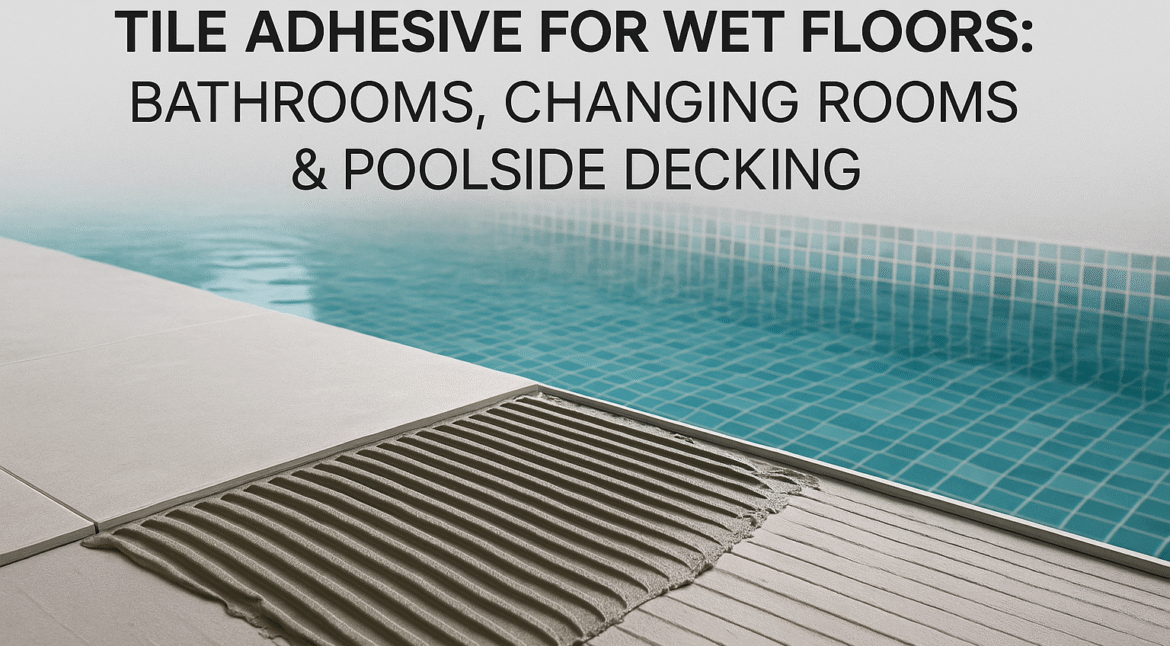
Tile Adhesive for Wet Floors: Bathrooms, Changing Rooms & Poolside Decking
Wet areas such as bathrooms, changing rooms, and poolside decks need more than just strong tiles—they need reliable bonding materials that can handle moisture, constant foot movement, and frequent temperature changes. Choosing the right tile adhesive for wet floors is one of the most important decisions in ensuring long-lasting, safe, and stable tile installations.
Common Question Asked:
Q.1 Is tile adhesive safe to use on wet floors like bathrooms and poolside decks?
Yes, tile adhesive is safe to use on wet floors as long as you select a water-resistant, polymer-modified adhesive designed specifically for wet areas. These adhesives prevent debonding, resist moisture penetration, and ensure long-term durability in constantly wet conditions.
Why Wet Floors Need Specialized Tile Adhesive
Wet floors stay damp for longer, experience more seepage, and face higher chances of tile lifting, fungal growth, and hollow patches beneath tiles. Standard adhesives often fail under these conditions because:
- Water weakens poorly bonded tiles
- Temperature changes cause expansion and contraction
- Constant foot traffic increases pressure on the bonding layer
- Chemicals (like chlorine near pools) can degrade ordinary adhesives
This is why specialized tile adhesive for wet areas is essential. The right adhesive not only prevents tile failure but also reduces future repair work and ensures safety.
Key Features to Look for in Tile Adhesive for Wet Floors
1. High Water Resistance
Wet floors are exposed to standing water, splashes, and moisture vapor. A reliable adhesive must resist all of these without breaking its bond.
Products like TERATILE MP are engineered to perform in bathrooms, showers, and pool decks due to their strong moisture resistance.
2. Anti-Slip and Non-Sag Properties
For floors, anti-slip properties help tiles remain stable during installation.
In wet areas, this becomes even more important because tiles must stay firmly in place even when the adhesive is exposed to moisture.
3. High Bond Strength
Wet areas experience repeated soaking and drying cycles. A strong polymer-modified adhesive ensures:
- No tile debonding
- No hollow or weak patches
- Better load distribution
TERATILE PLATINUM, for example, provides excellent bond strength suitable for bathrooms and changing rooms.
4. Longer Open Time
Installations in wet areas often require precise placement. Adhesives with longer open time allow tilers to work comfortably without rushing.
5. Compatibility With Different Tile Types
Wet floors are often used:
- Vitrified tiles
- Ceramic tiles
- Porcelain tiles
- Anti-skid tiles
- Stone tiles (in premium pool decks)
Each tile type requires a compatible adhesive to ensure proper bonding.
Best Tile Adhesive for Bathroom Floors
Bathroom floors face constant water exposure from showers, cleaning, steam, and humidity.
A high-quality bathroom floor tile adhesive should be:
- Water-resistant
- Flexible enough to handle movement
- Strong enough to prevent tile popping
- Compatible with anti-skid and vitrified tiles
TERATILE MP is a strong fit for bathroom floors because it is formulated specifically for wet areas and humid conditions. It reduces the risk of tile lifting, mold growth under tiles, and long-term moisture damage.
For premium bathroom installations needing higher adhesive strength, TERATILE PLATINUM is another suitable option.
Choosing Tile Adhesive for Changing Rooms
Changing rooms in gyms, sports complexes, pools, and industrial facilities experience:
- High moisture
- Constant foot traffic
- Cleaning chemicals
- Temperature fluctuations
These conditions require an adhesive with strong bonding and better resistance to chemical exposure.
Recommended Redwop Products for Changing Rooms
- TERATILE PLATINUM is for strong bonding under daily foot traffic
- TERATILE PROLIX is suitable for both walls and floors in high-moisture spaces
Using these adhesives helps eliminate future problems such as loose tiles, water seepage beneath tiles, and grout cracking.
Tile Adhesive for Poolside Decking
Pool decks are among the most demanding wet-floor environments due to:
- Direct exposure to water
- Heat from sunlight
- Chlorine and cleaning chemicals
- Heavy foot traffic
- Slippery surfaces
For such areas, an ordinary adhesive simply isn’t enough. A specialized water-resistant tile adhesive is required to withstand weathering and outdoor conditions.
What Makes Pool Areas Challenging?
- Constant contact with chlorinated water
- Rapid drying and soaking cycles
- UV exposure causes thermal expansion
- Potential for staining under natural stone tiles
Best Redwop Adhesive Options for Pool Decks
- TERATILE MP is suitable for swimming pools and water-retaining structures
- TERATILE PLATINUM can be used for external wet-floor surfaces and heavy tiles
Both options offer strong adhesion, water resistance, and long-term durability outdoors.
How to Ensure Long-Lasting Tile Installation in Wet Areas
1. Proper Surface Preparation
Before applying adhesive:
- The surface must be clean
- No loose particles or dust
- No standing water
- The substrate should be even and stable
Good surface preparation ensures maximum adhesion.
2. Correct Mixing Ratio
Always follow the product’s recommended water-to-powder ratio.
Incorrect mixing can weaken the adhesive and reduce its water resistance.
3. Use the Right Notch Trowel
The trowel notch should match the tile size.
Larger tiles require larger notches to ensure adequate adhesive coverage.
4. Ensure Full Coverage
In wet areas, leaving air pockets under tiles can cause:
- Water seepage
- Tile cracking
- Hollow sounds
- Debonding
Full coverage is critical in bathrooms and poolside installations.
5. Allow Sufficient Curing Time
Wet floors must not be exposed to water before the adhesive fully cures. Always follow the manufacturer’s curing time guidelines.
Conclusion
Wet floors are some of the most demanding environments for tile installations. Bathrooms, changing rooms, and poolside decks all require tile adhesives that can withstand continuous moisture, temperature shifts, and constant foot movement. Using the right tile adhesive for wet floors not only prevents tile failures but also increases the lifespan and safety of the entire flooring system.
Adhesives like TERATILE MP, TERATILE PLATINUM, and TERATILE PROLIX offer the strength, water resistance, and flexibility needed for these challenging areas. When combined with proper surface preparation, correct mixing, and full adhesive coverage, they deliver long-term reliability and reduce future repair costs. For more information, Contact Us.
FAQs
-
1. Which tile adhesive is best for wet floors?
A polymer-modified, water-resistant adhesive such as TERATILE MP is ideal for wet floors like bathrooms and pool decks.
-
2. Can I use the same tile adhesive for bathrooms and pool areas?
Yes, but pool areas often require stronger water and chemical resistance. TERATILE MP works for both, while TERATILE PLATINUM is suitable for external wet floors.
-
3. Is tile adhesive better than cement for wet areas?
Yes. Cement absorbs water and weakens over time, while tile adhesive offers superior bonding and moisture resistance.
-
4. How thick should tile adhesive be applied on wet floors?
Typically 3–5 mm, depending on tile size and substrate condition. Larger tiles may require more adhesive.
-
5. Can tile adhesive prevent hollow sounds under tiles?
Yes, when applied correctly with full coverage, tile adhesive prevents voids that cause hollow sounds.