


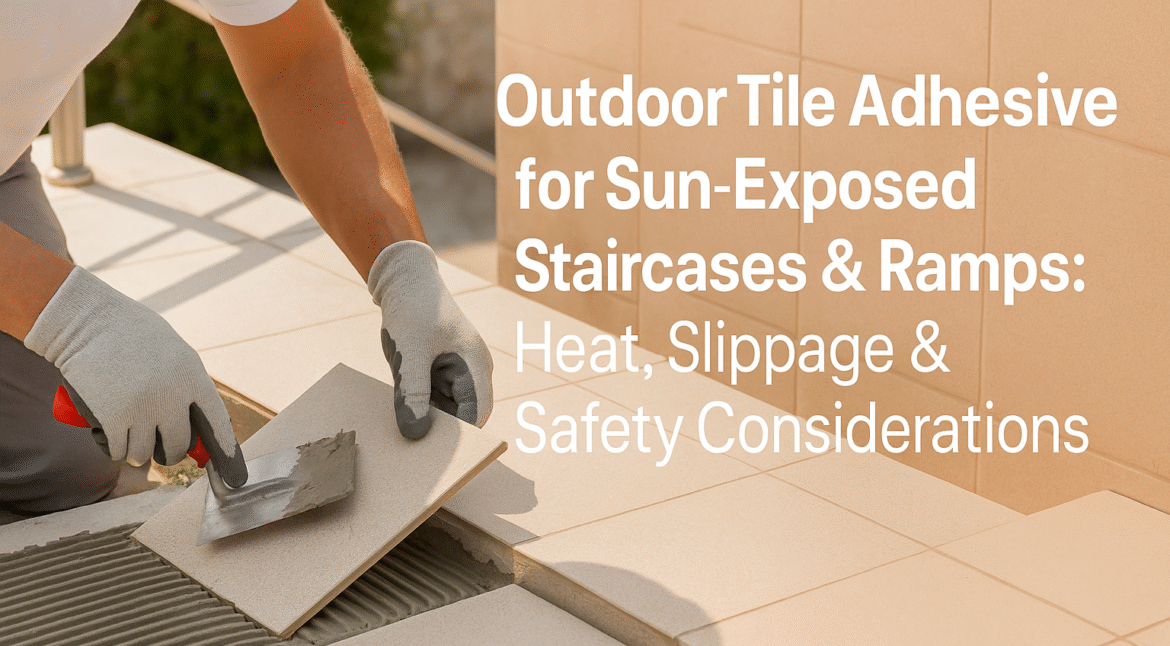
Outdoor Tile Adhesive for Sun-Exposed Staircases & Ramps: Heat, Slippage & Safety Considerations
Outdoor staircases and ramps face harsher conditions than almost any other tiled surface. Direct sun exposure, steep incline angles, continuous foot pressure, and sudden weather changes all place significant stress on the tile system. If the adhesive beneath the tiles is not designed to handle these demands, issues like cracking, debonding, slippage, or surface instability begin to appear quickly. That’s why choosing the right outdoor tile adhesive is crucial for long-term safety and durability.
Common Question Asked:
Q.1 Can regular tile adhesive be used on outdoor staircases and ramps that receive heavy sunlight?
No, regular tile adhesive is not suitable for sun-exposed outdoor staircases and ramps. These surfaces require a specialised exterior tile adhesive that can handle heat, UV radiation, moisture, and slope pressure without losing bond strength.
Why Outdoor Staircases & Ramps Need Specialized Adhesive
Outdoor steps and ramps deal with more pressure than regular exterior floors. Because of their slope and exposure, the adhesive beneath the tiles has to manage more movement, more impact, and more changes in temperature throughout the day.
Here’s why these areas place extra stress on the tile system:
1. Higher Impact Per Step
Every step lands on the front edge of the tile first, which puts more pressure on the bonding layer compared to a flat surface.
2. Slope Creates Shear Pressure
On ramps, tiles face a constant downward pull. The adhesive must hold the tile firmly in place to prevent slow shifting over time.
3. Direct Sun & High Temperatures
Outdoor stairs heat up quickly in the sunlight. As tiles expand under heat and contract when they cool, a rigid adhesive may crack or lose grip.
4. Sudden Weather Changes
Rain, shade, or evening temperatures cool the surface rapidly. These quick temperature swings demand an adhesive with good thermal flexibility.
5. Slip Safety Requirements
Any hollow or loose tile increases the risk of slipping and especially when the surface is wet. A strong, full-contact bond is essential for safety.
A durable, flexible, exterior-grade adhesive is the only reliable way to keep outdoor stairs and ramps stable in these conditions.
Heat & Sun Exposure: The Biggest Threat to Outdoor Tile Stability
1. Thermal Expansion & Contraction
Outdoor tiles expand noticeably under strong sunlight. As temperatures drop in the evening, they contract. This cycle repeats daily and is more intense on surfaces that stay exposed for long hours.
If the adhesive cannot adapt, problems such as these occur:
- Hairline cracks in grout
- Debonding from the substrate
- Hollow-sounding tiles
- Complete tile popping in extreme cases
A flexible outdoor stone tile adhesive can absorb thermal movement and prevent failures.
2. UV Exposure Weakens Low-Quality Adhesives
UV rays break down adhesives that are not designed for prolonged sunlight. Over time, low-quality adhesives become:
- Brittle
- Powdery
- Weak in bonding strength
This leads to loosened tiles that shift when stepped on.
Polymer-modified exterior adhesives resist UV degradation and retain strength for years.
Slippage Risks on Ramps & Outdoor Stairs
Slippage is not just a tile-surface issue; it also concerns the adhesive beneath.
If the bond between the tile and substrate weakens, the tile can move slightly, creating:
- A slippery surface
- Uneven steps
- Edge lifting
- Potential trip hazards
Full adhesive coverage becomes extremely important for slopes because voids under tiles increase the chance of movement.
To achieve maximum bonding, installers often use back-buttering along with a properly notched trowel. This ensures every part of the tile makes firm contact with the adhesive.
How Rain, Dew & Moisture Affect Outdoor Tile Installation
Outdoor stairs and ramps frequently get wet due to:
- Rain
- Washing
- Early-morning condensation
- Garden sprinklers
- Moisture seepage
Moisture affects bonding in two major ways:
1. Weakening the Adhesive Layer
If the adhesive isn’t water-resistant, moisture penetrates and reduces its grip, leading to tile debonding.
2. Making the Surface Slippery
Tiles that are not bonded properly often lift slightly. Even a few millimetres can trap water and increase slip hazards.
Using a water-resistant exterior tile adhesive prevents moisture from weakening the installation.
Choosing the Right Tile Adhesive for Outdoor Stairs & Ramps
The adhesive used must match outdoor challenges: heat, UV exposure, slope pressure, and moisture.
Professionals often choose adhesives that are:
- Polymer Tile Adhesive
- Heat-resistant
- UV-stable
- Flexible
- Water-resistant
- Suitable for stone and heavy tiles
In real installations, contractors often use high-performance formulations such as TERATILE SINEX, which is engineered for outdoor environments where sunlight and heat are constant factors.
For heavier materials or stone tiles on staircases, products like TERATILE DIAMOND are also frequently used due to their strong bonding and exterior stability. In situations where both slope and moisture resistance matter, TERATILE PLATINUM provides a durable foundation for exterior tiled ramps and steps.
Each of these adhesives supports outdoor flooring needs without forcing internal links unnaturally.
Best Practices for Installing Tiles on Sun-Exposed Stairs & Ramps
Correct installation makes as much difference as choosing the right adhesive.
1. Proper Surface Preparation
- Ensure no dust or loose particles
- The substrate must be solid and fully cured
- Remove old adhesive or uneven patches
2. Correct Trowel Selection
Use a notch size that matches the tile size. Larger tiles require deeper notches for proper adhesive spread.
3. Back-Buttering Is Crucial
Outdoor stairs and ramps must have 100% tile coverage—no voids allowed.
4. Install Tiles During Cooler Hours
Avoid peak sunlight. Heat causes the adhesive to dry too quickly and may reduce bonding strength.
5. Add Expansion Gaps
These allow tiles to expand safely without cracking or pushing against each other.
6. Allow Proper Curing Time
Do not expose the installation to water or foot traffic before the adhesive reaches full strength.
Conclusion
Outdoor staircases and ramps demand more from a tile adhesive than standard flat surfaces ever will. They endure direct sun, heat expansion, UV exposure, moisture, impact loads, and slippage risks—often all at once.
Using the right outdoor tile adhesive, paired with proper installation techniques, ensures tiles stay secure, safe, and visually consistent for years. Whether the surface is stone, ceramic, or porcelain, prioritising heat resistance, flexibility, and strong bonding is the key to long-lasting outdoor flooring. For more information, Contact Us.
FAQs
-
1. Which tile adhesive works best for outdoor sun-exposed staircases?
A flexible, UV-resistant exterior adhesive is ideal, especially polymer-modified formulations made for outdoor heat and weather conditions.
-
2. Can outdoor tiles pop due to sunlight?
Yes. Extreme heat and rapid cooling can cause expansion and contraction, leading to tile popping if the adhesive isn’t flexible enough.
-
3. Is stone tile more difficult to install on outdoor ramps?
Stone tiles are heavier and may require stronger bonding. Using a high-performance outdoor stone tile adhesive ensures stability.
-
4. How do you prevent slipping on outdoor tiled stairs?
Use anti-skid tile surfaces and ensure full adhesive coverage to prevent hollow areas that create unsafe movement.
-
5. Can I install tiles on outdoor stairs during hot afternoons?
It’s not recommended. High heat causes the adhesive to dry too fast and may reduce bonding strength. Install during cooler hours.