


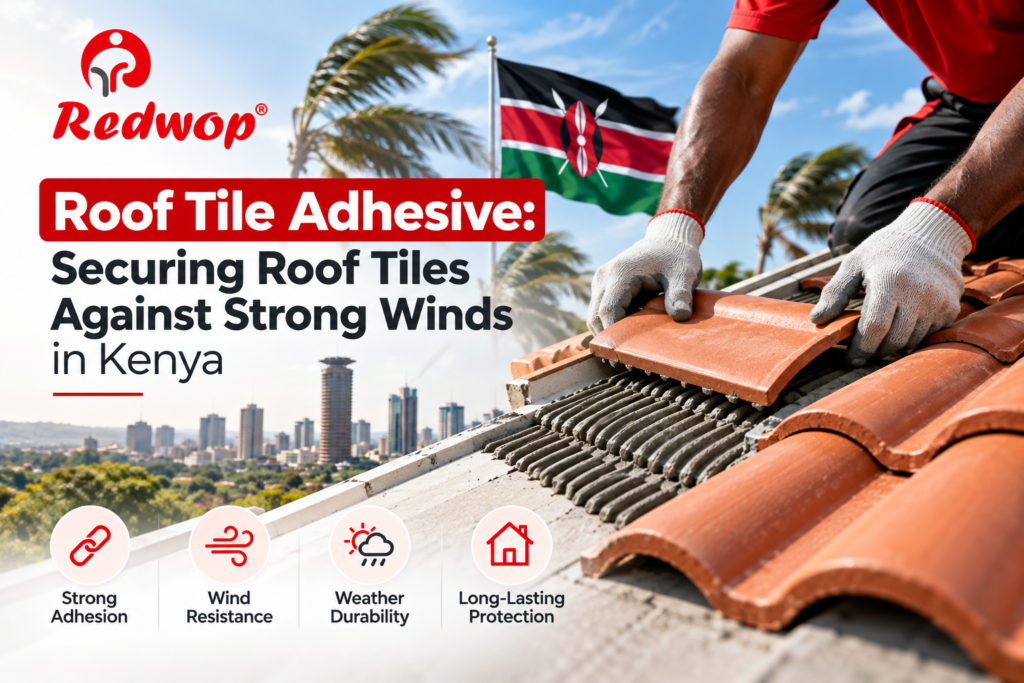
Roof Tile Adhesive: Securing Roof Tiles Against Strong Winds in Kenya
There’s a particular kind of dread that comes with hearing a loose roof tile rattle during a storm, knowing it’s only a matter of time before it lifts, cracks, or goes flying off entirely. Across Kenya, from the wind-exposed highlands around Nakuru and Eldoret to coastal areas near Mombasa that see strong seasonal gusts, roof tiles that weren’t properly secured are one of the most common and most preventable sources of storm damage.
The right Roof Tile Adhesive in Kenya doesn’t just hold tiles in place cosmetically; it’s what determines whether your roof survives the next heavy windstorm intact or ends up scattered across the yard. This guide walks through what actually makes an adhesive wind-resistant, the different types available, and how to install roof tiles so they stay put when the weather turns.
Why Wind Resistance Matters for Roof Tiles in Kenya
Kenya’s geography creates a wide range of wind exposure depending on region. Highland areas and open plains often see sustained strong winds, while coastal zones face seasonal storms that can generate sudden, powerful gusts. A few consequences of inadequately secured roof tiles:
- Uplift failure wind moving across a roof creates a lifting force under loosely fixed tiles, similar to how air moves under an aircraft wing
- Cascading tile loss once one tile lifts and detaches, neighboring tiles often follow as the gap exposes more surface area to wind
- Water damage even a single displaced tile creates an entry point for rain, which can lead to far more expensive damage than the tile itself
- Repeated repair costs roofs that lose tiles regularly end up costing more over time than getting the adhesive and installation right from the start
What Makes a Good Roof Tile Adhesive
Not every adhesive marketed for tiles is actually suited to roofing. A genuinely reliable roof tile adhesive needs to offer:
- Strong initial and cured bond strength to resist the constant uplift force wind generates across a roof surface
- Flexibility roofs expand and contract significantly with daily heat cycles, and a rigid adhesive will crack under that movement
- UV and weather resistance since roof tiles face constant direct sun and rain exposure with no interior protection
- Fast, reliable curing so tiles are secure as quickly as possible after installation or repair
Common Question Asked:-
How often should roof tile adhesive be inspected or reapplied?
Periodic inspection, especially after major storms, helps catch early signs of loosening before a full tile failure occurs; reapplication timing depends on the specific product and exposure conditions.
Types of Roof Tile Adhesive
Cement Based Tile Adhesive for Roofs
A Cement Based Tile Adhesive remains a common choice for roof tile installation, offering solid bond strength for standard clay or concrete roof tiles when applied correctly with adequate coverage and proper surface preparation.
Tile Cement for Roofing Applications
Broadly referred to as Tile Cement, this category of product covers purpose-made bonding compounds distinct from older mortar-based fixing methods, which tend to be more rigid and prone to cracking under a roof’s constant thermal movement.
Quick Set Tile Adhesive for Roof Repairs
When a storm has already knocked a few tiles loose, time matters. A Quick Set Tile Adhesive allows for faster repairs, reducing the window during which a gap in the roof is exposed to further wind or rain before the fix is fully secured.
Large Format Tile Adhesive for Roof Tiles
Larger roofing tiles carry more surface area for wind to act on, which means they need a Large Format Tile Adhesive with enough initial grab and flexibility to resist both installation slippage and long-term wind-driven stress.
Heat and Weather Resistance
Heat Resistant Tile Adhesive
Roof surfaces absorb significant heat throughout the day, especially with dark-colored tiles. A Heat Resistant Tile Adhesive maintains its bond strength under sustained high temperatures, where a standard adhesive might soften or weaken over time.
Outdoor Tile Adhesive
More broadly, any Outdoor Tile Adhesive used on a roof needs UV resistance to prevent the adhesive itself from degrading under constant sun exposure, which would otherwise compromise the very bond strength the tiles depend on for wind resistance.
Waterproofing and Roof Tile Adhesive: A Connected System
Securing tiles against wind is only part of a complete roofing solution. Once tiles are firmly fixed, the roof still needs protection against water penetration through joints, laps, and fixing points. A Liquid Waterproofing Compound for Roofs applied alongside proper tile adhesive gives a roof two layers of defense — one securing the tiles physically, and one sealing against water ingress at the points where wind and rain are most likely to find a way in. Treating these as one connected system, rather than tile fixing and waterproofing as separate afterthoughts, gives a much more storm-resilient roof overall.
Common Causes of Roof Tile Failure in Strong Winds
Understanding why tiles fail helps explain why adhesive choice and application matter so much:
- Insufficient adhesive coverage gaps or thin application points create weak spots where wind can start lifting a tile
- Using indoor-grade adhesive outdoors a product not rated for UV and weather exposure degrades faster than expected
- Skipping surface preparation dust, debris, or old adhesive residue prevents a new application from bonding properly
- Ignoring edge and ridge tiles these experience the highest wind uplift forces and need extra attention during installation
- Rushing the cure time walking on or stressing tiles before the adhesive has fully cured weakens the eventual bond
How to Properly Install Roof Tile Adhesive for Wind Resistance
A reliable installation process typically follows this sequence:
- Clean the surface thoroughly removing dust, debris, and any old adhesive residue
- Apply adhesive with full, even coverage avoiding gaps that create weak points
- Pay special attention to edge, ridge, and hip tiles these face the highest wind uplift forces
- Press tiles firmly into place ensuring full contact with the adhesive layer
- Allow full curing time before exposure to wind or foot traffic rushing this step undermines the whole installation
- Follow up with roof waterproofing sealing joints and fixing points once tiles are securely bonded
Ceramic Tile Adhesive vs Roof-Specific Formulations
It’s worth noting that standard Ceramic Tile Adhesive, designed for indoor floor and wall applications, generally isn’t suitable for roofing use. Roof conditions constant sun, rain, temperature swings, and wind uplift demand a formulation specifically built for exterior, load-bearing performance, not the lighter-duty bonding a standard ceramic adhesive is designed for indoors.
Tile Glue for Walls vs Roof Tile Adhesive
Similarly, a Tile Glue for Walls product, while effective for vertical wall applications, isn’t engineered to resist the specific combination of wind uplift and weather exposure that roof tiles face. Using a wall-rated adhesive on a roof is one of the more common mistakes that leads to premature tile loss during storms.
Why Redwop Offers Reliable Roof Tile Adhesive in Kenya
Redwop supplies tile adhesive formulations built for Kenya’s varied climate conditions — from highland wind exposure to coastal humidity and storm activity — rather than generic products adapted from indoor use. Alongside roof-specific tile adhesive, Redwop’s waterproofing chemical range means roofing contractors and homeowners can source both the adhesive and the complementary waterproofing treatment needed for a genuinely storm-resistant roof from a single, knowledgeable supplier.
What matters most isn’t just the product on the shelf, but getting guidance on the right formulation and application method for your specific roof type, tile material, and regional wind exposure which is exactly the kind of support that separates a roof that survives its first major storm from one that doesn’t.
How to Choose the Right Roof Tile Adhesive
Situation | Recommended Approach |
Standard clay/concrete roof tiles | Cement based tile adhesive with full coverage |
High-wind or coastal regions | Roof-specific adhesive with strong flexibility and UV resistance |
Emergency repairs after storm damage | Quick set tile adhesive |
Large or heavy roof tiles | Large format tile adhesive with strong initial grab |
Dark tiles in high-heat areas | Heat resistant tile adhesive |
Complete roofing system | Roof tile adhesive paired with a liquid waterproofing compound |
Final Thoughts
Roof tiles rarely fail without warning a rattle in strong wind, a slightly lifted edge, or a gap that lets water in are all signs that the original installation wasn’t built to handle the wind exposure your roof actually faces. Choosing the right Roof Tile Adhesive in Kenya, applying it with full coverage and proper attention to edge and ridge tiles, and pairing it with the right waterproofing treatment is what separates a roof that shrugs off the next storm from one that ends up scattered across the yard.
If you’re planning a new roof or repairing storm damage, Redwop can help match the right roof tile adhesive and waterproofing combination to your specific region and tile type.
FAQS:-
-
1. What is the best roof tile adhesive in Kenya for high-wind regions?
A flexible, UV-resistant roof-specific adhesive with strong bond strength is best suited for high-wind regions, since it resists both uplift forces and weather degradation.
-
2. Why do roof tiles come loose during strong winds?
Loose tiles are usually caused by insufficient adhesive coverage, using an indoor-grade product outdoors, or inadequate attention to edge and ridge tiles during installation.
-
3. Can I use cement based tile adhesive for roof tiles?
Yes, cement based tile adhesive can work for roof tiles when applied with full coverage and proper surface preparation, though roof-specific formulations often perform better under wind stress.
-
4.What is large format tile adhesive and why does it matter?
It's formulated with extra grab and flexibility to prevent big tiles from slipping out of place during installation, unlike standard adhesive.
-
5.Is ceramic tile adhesive suitable for all tile types?
Standard ceramic tile adhesive works well for basic ceramic tiles but isn't always strong enough for denser tiles like porcelain, which need a specific polymer-modified formulation.
-
6. Is outdoor tile adhesive the same as roof tile adhesive?
They're closely related outdoor tile adhesive is UV and weather resistant, which is a baseline requirement for any adhesive used on a roof.
-
7. How does a liquid waterproofing compound for roofs work alongside tile adhesive?
It seals joints and fixing points after tiles are securely bonded, adding a second layer of protection against water ingress beyond what the adhesive alone provides.
-
8. Can ceramic tile adhesive be used on roofs instead of a roof-specific product?
No, standard ceramic tile adhesive is designed for indoor use and generally isn't rated for the wind, UV, and weather exposure roof tiles face.
-
9. What's the difference between tile glue for walls and roof tile adhesive?
Wall tile glue is designed for vertical indoor bonding, while roof tile adhesive is engineered specifically to resist wind uplift and outdoor weather exposure.
-
10. What surface preparation is needed before applying roof tile adhesive?
The surface should be thoroughly cleaned of dust, debris, and any old adhesive residue to ensure proper bonding of the new application.