


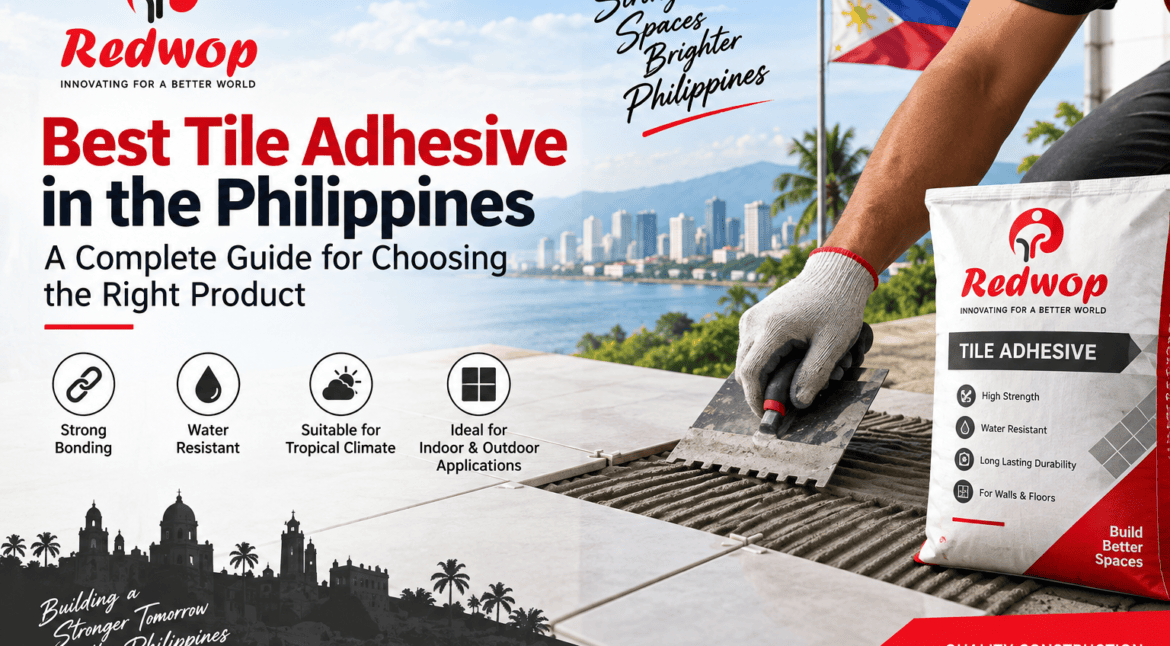
Best Tile Adhesive in the Philippines: A Complete Guide for Choosing the Right Product
Walk into any hardware store in Manila, Cebu, or Davao, and you’ll find rows of tile adhesive bags with barely any real guidance on which one actually fits your project. Most people end up choosing based on price or whatever the shop assistant happens to recommend that day and then wonder a year later why a few tiles in the bathroom sound hollow when tapped, or why the pool deck tiles have started lifting at the edges.
Picking the right product isn’t complicated once you understand what actually determines performance: the tile type, the surface you’re bonding to, and how much water or movement that area will see over time. This guide walks through all of it, so you can buy with confidence instead of guessing.
Why Choosing the Right Tile Adhesive Matters in the Philippines
The Philippines’ tropical climate high humidity, heavy monsoon rains, and frequent temperature swings between sun and rain puts real stress on tile installations. An adhesive that performs fine in a dry, temperate climate can fail here within a year or two if it wasn’t formulated to handle sustained moisture and thermal movement. Getting the adhesive choice right the first time avoids:
- Hollow-sounding tiles that eventually crack or lift
- Water seeping behind tiles in bathrooms, showers, and pool areas
- Adhesive failure from heat-driven expansion and contraction
- Costly re-tiling work that could have been avoided from the start
Types of Tile Adhesive Available
Cement Based Tile Adhesive
A Cement Based Tile Adhesive is the most common and budget-friendly option, suitable for standard ceramic tiles on dry indoor floors and walls. It offers a solid, reliable bond for everyday residential use, though it generally isn’t the best choice for wet areas or heavier tile formats without added modifiers.
Ready Mixed and Pre Mixed Tile Adhesive
A ready mixed tile adhesive or pre mixed tile adhesive comes pre-blended and ready to apply straight from the container, which is convenient for smaller jobs or DIY projects where mixing consistency can otherwise be a challenge. These tend to cost more per coverage area than powder-based adhesive but save time and reduce the risk of an improperly mixed batch.
Epoxy Tile Adhesive
Epoxy tile adhesive is a two-component system offering exceptional bond strength and chemical resistance, making it a strong choice for commercial kitchens, areas exposed to chemicals, or tiling projects where standard cement-based products simply won’t hold up. It costs more and requires more careful application, but the performance trade-off is often worth it for demanding environments.
Common Question Asked:
What is pool tile cement and why is it different from regular adhesive?
Pool tile cement is a fully waterproof, flexible adhesive formulated to withstand constant submersion and chemical exposure, unlike regular adhesive which isn’t built for this level of stress.
Choosing Tile Adhesive by Tile Type
Different tile materials bond differently, and using the wrong adhesive type for a given tile is one of the most common causes of premature failure.
Thinset for Porcelain Tile
Porcelain is dense and less porous than standard ceramic, so it needs a thinset for porcelain tile specifically formulated with strong polymer modification to achieve a reliable bond a standard cement adhesive often isn’t enough on its own.
Thinset for Glass Tile
Glass tiles are translucent, so thinset for glass tile applications typically use a white or light-colored, non-staining formulation to avoid discoloration showing through the tile from behind.
Ceramic Tile Adhesive
Standard ceramic tile adhesive works well for most residential floor and wall applications, offering solid performance at a reasonable cost for everyday tiling needs.
Tile Adhesive for Wet Areas
Wet areas are where adhesive choice matters most, since ongoing water exposure is exactly what causes weaker products to fail.
Bathroom Tile Adhesive
A reliable bathroom tile adhesive needs to handle constant humidity and occasional standing water without weakening over time a standard dry-area adhesive typically isn’t rated for this level of moisture exposure.
Shower Tile Adhesive and Waterproof Adhesive for Shower
Shower tile adhesive faces some of the most demanding conditions in a home, with constant water contact and temperature swings from hot water use. A proper waterproof adhesive for shower applications should be paired with a waterproofing membrane underneath for the most reliable long-term protection, rather than relying on the adhesive alone to keep water out.
Water Resistant Tile Adhesive
More broadly, a water resistant tile adhesive is worth using in any area with elevated humidity or occasional water exposure kitchens, laundry areas, and covered outdoor spaces even where full waterproofing isn’t strictly necessary.
Pool Tile Cement
Pool tiling is one of the toughest applications of all, since it’s permanently submerged and exposed to chlorinated water. Pool tile cement needs to be fully waterproof, flexible enough to handle constant temperature-driven movement, and resistant to pool chemicals a regular tile adhesive will fail here within months.
Tile Adhesive for Walls and Floors
Wall Tile Adhesive and Adhesive Wall Tiles
A dedicated wall tile adhesive needs enough initial grab to hold tiles in place vertically before the adhesive fully sets, which is different from floor adhesive that doesn’t need to resist gravity in the same way. When shopping for adhesive wall tiles products, check the label specifically confirms suitability for vertical application.
Tile Adhesive for Floor Tiles
Tile adhesive for floor tiles generally prioritizes strong horizontal bond strength and, for larger format tiles, enough flexibility to handle foot traffic and minor structural movement without cracking.
Outdoor Tile Adhesive
Outdoor tile adhesive needs UV resistance and the flexibility to handle direct sun, rain, and temperature swings — a standard indoor adhesive will degrade quickly when used outdoors in the Philippines’ climate.
Roof Tile Adhesive
For terraces, rooftop decks, and similar applications, roof tile adhesive should combine waterproof performance with the flexibility to handle thermal expansion from direct sun exposure throughout the day.
Beyond Traditional Tile Adhesive: Other Adhesive Options
Not every tiling or flooring project uses standard tile adhesive, and it’s worth understanding how these differ.
Self Adhesive Floor Tiles and Self Adhesive Mosaic Tiles
Self adhesive floor tiles and self adhesive mosaic tiles come with a built-in sticky backing, designed for quick DIY installation without needing a separate adhesive product. They’re convenient for small areas or temporary updates but don’t offer the same long-term bond strength as properly applied tile adhesive with ceramic or porcelain tile.
Cork Wall Tiles Self Adhesive
Similarly, cork wall tiles self adhesive products are designed for easy peel-and-stick installation, typically used for decorative wall panels rather than wet or heavy-traffic areas.
Glue Down Vinyl Plank Flooring and Luxury Vinyl Plank Glue Down
For vinyl flooring specifically, glue down vinyl plank flooring uses a dedicated flooring adhesive rather than tile adhesive, since vinyl planks require a different bonding approach suited to their flexible material. A luxury vinyl plank glue down installation, done correctly, offers excellent stability for high-traffic commercial or residential spaces.
Carpet Tile Tackifier Adhesive
For modular carpet tiles, a carpet tile tackifier adhesive is used instead of standard tile adhesive it’s a low-tack, repositionable product designed to hold carpet tiles in place without a permanent bond, making future replacement or rearrangement easier.
Understanding Tiles Chemical and Tile Glue Adhesive Terminology
Terms like tiles chemical and tile glue adhesive are often used interchangeably in the market, but they generally refer to the same category of bonding products used to fix tiles to a substrate. When comparing products under either term, the same fundamentals apply: check the tile type, the surface, and the moisture exposure before choosing.
Why Redwop Offers the Best Tile Adhesive in the Philippines
Redwop supplies a full range of tile adhesive solutions formulated for the conditions discussed throughout this guide from standard cement-based adhesive for everyday flooring to waterproof, polymer-modified formulations suited to bathrooms, showers, and pool applications.
What sets Redwop apart isn’t just product variety, but guidance. Instead of leaving customers to guess which bag suits their project, the team helps match the right tile adhesive to the tile type, surface, and moisture exposure involved which is often the real difference between an installation that lasts for decades and one that needs redoing within a couple of years.
How to Choose: A Quick Reference
Application | Recommended Adhesive Type |
Standard indoor floors/walls | Cement based tile adhesive |
Porcelain tile | Polymer-modified thinset for porcelain tile |
Glass tile | Non-staining thinset for glass tile |
Bathrooms and showers | Waterproof, polymer-modified bathroom/shower tile adhesive |
Swimming pools | Waterproof pool tile cement |
Outdoor and rooftop areas | UV-resistant outdoor or roof tile adhesive |
Chemical-exposed commercial areas | Epoxy tile adhesive |
Quick DIY updates | Self adhesive floor or mosaic tiles |
Final Thoughts
Choosing tile adhesive shouldn’t come down to whichever bag is nearest the store entrance or the lowest price tag. Matching the adhesive to your tile type, surface, and moisture exposure is what actually determines whether your tiling job lasts for decades or needs redoing within a couple of years. Whether you’re tiling a bathroom, a pool deck, or a simple living room floor, taking the time to choose the Best Tile Adhesive for your specific project pays off far more than chasing the cheapest option.
If you’re unsure which formulation fits your project, Redwop’s tile adhesive range covers everything from standard indoor floors to fully waterproof pool and shower applications, with guidance to match the right product to your needs.
-
1. Which tile adhesive works best for bathroom floors in the Philippines?
A waterproof, polymer-modified bathroom tile adhesive is best, since it can handle constant humidity and occasional standing water without weakening over time.
-
2. What is epoxy tile adhesive best used for?
Epoxy tile adhesive is ideal for commercial kitchens or chemically exposed areas, offering strong bond strength and chemical resistance beyond what standard cement adhesive provides
-
3. Are self adhesive floor tiles a good long-term flooring option?
They're better suited for quick, temporary, or low-traffic updates rather than permanent installations in wet or heavy-use areas.
-
4.What tile adhesive should I use for bathroom walls specifically?
Bathroom tile adhesive rated for wet areas, ideally waterproof and polymer-modified, is recommended for reliable long-term bonding on bathroom walls.
-
5. What is ready mixed tile adhesive and when should I use it?
It's a pre-blended adhesive that skips the mixing step, useful for smaller jobs or DIY projects where consistent mixing is a concern.
-
6.Is ceramic tile adhesive suitable for all tile types?
Standard ceramic tile adhesive works well for basic ceramic tiles but isn't always strong enough for denser tiles like porcelain, which typically need a specific polymer-modified thinset.
-
7.What makes outdoor tile adhesive different from indoor adhesive?
Outdoor tile adhesive needs UV resistance and flexibility to handle sun, rain, and temperature swings that indoor adhesive isn't formulated for.
-
8.What is the best cement based tile adhesive for everyday residential use?
A quality cement based tile adhesive suited to your local climate and tile type offers a reliable, budget-friendly bond for standard indoor floors and walls.
-
9. What is pre mixed tile adhesive and how does it differ from powder adhesive?
Pre mixed tile adhesive comes ready to use straight from the container, while powder adhesive needs to be mixed with water before application.
-
10. Is there a specific waterproof adhesive for shower installations?
Yes, waterproof adhesive for shower applications is specifically formulated to resist constant water exposure and should be paired with proper waterproofing underneath.