


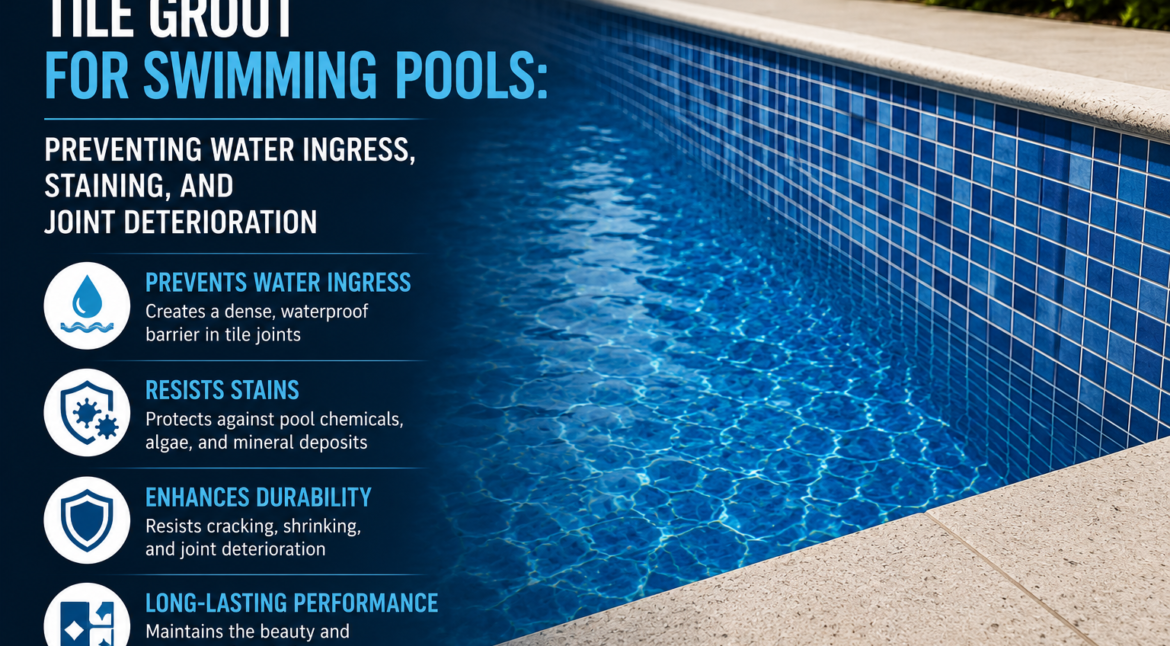
Tile Grout for Swimming Pools: Preventing Water Ingress, Staining, and Joint Deterioration
Swimming pools operate in one of the most demanding environments for tiled surfaces. Unlike regular floors and walls, pool tiles remain in constant contact with water, chemicals, temperature fluctuations, and cleaning agents. While tiles often receive most of the attention, the long-term performance of a swimming pool largely depends on the condition of its grout joints.
When grout begins to absorb water, crack, or deteriorate, it creates pathways for moisture ingress that can eventually lead to tile loosening, staining, and costly repairs. This is why selecting the right Tile Grout system is essential for maintaining pool durability and appearance.
Common Question Asked:
Q.1 Why do swimming pool tile joints deteriorate over time?
Swimming pool grout joints deteriorate due to constant water exposure, chemical attack, improper grout selection, poor installation practices, and movement within the tiled surface.
Why Swimming Pools Place High Stress on Tile Joints
Swimming pools expose grout joints to continuous challenges such as:
- permanent water immersion
- chlorine and chemical exposure
- thermal expansion and contraction
- cleaning chemicals
- hydrostatic pressure
These conditions gradually weaken poorly selected grout systems and increase the risk of joint failure.
Common Problems Caused by Poor Pool Grouting
Water Ingress Behind Tiles
When grout becomes porous or cracked, water penetrates behind the tiled surface.
This can lead to:
- tile debonding
- hollow sound
- moisture migration
- substrate deterioration
Staining and Discoloration
Pool chemicals, minerals, and algae growth can stain grout joints over time.
Discolored joints reduce the visual appearance of:
- swimming pools
- spa areas
- water features
Joint Cracking
Movement within the tiled surface can cause weak grout joints to crack.
Cracked joints become direct entry points for water infiltration.
Tile Loosening and Detachment
Once water enters beneath the tiles, adhesive performance can gradually decline, increasing the risk of tile failure.
Why Tile Grout Selection Matters in Swimming Pools
The primary function of tile grout is not simply filling gaps between tiles.
A high-performance grout helps:
- protect tile edges
- reduce water penetration
- improve joint durability
- maintain aesthetic appearance
Pool environments require grout systems capable of performing under continuous wet conditions.
Role of Cement Tile Grout in Pool Tiling
Cement tile grout remains a popular solution for many pool projects because of its ease of application and cost-effectiveness.
For standard swimming pool applications, Tile Grout helps provide joint filling and surface finishing while maintaining tile alignment and appearance.
Cementitious grout systems are often used in:
- residential pools
- decorative water features
- landscape water elements
However, their performance depends heavily on:
- proper installation
- joint width
- curing conditions
- water exposure levels
Challenges Faced by Cement Tile Grout in Pools
Swimming pool environments continuously expose grout to water and chemicals.
Over time, cement-based grout may experience:
- water absorption
- discoloration
- surface erosion
- staining
These issues become more noticeable in heavily used pools and chemically treated environments.
Why Epoxy Tile Grout Performs Better in Wet Conditions
For demanding pool environments, epoxy tile grout offers significant advantages.
Epoxy grout systems provide:
- low water absorption
- superior stain resistance
- chemical resistance
- higher durability
Unlike conventional cement grout, epoxy systems create a denser joint structure that performs better under continuous immersion.
Waterproof Epoxy Grout for Long-Term Pool Durability
A waterproof epoxy grout system helps minimize water penetration through tile joints.
This becomes particularly important in:
- swimming pools
- spas
- fountains
- water-retaining structures
For pool projects requiring enhanced resistance to moisture and chemical exposure, EPTILE GROUT helps provide durable joint protection and improved long-term performance.
Preventing Staining in Decorative Pool Areas
Aesthetic appearance is a major concern in premium pool projects.
Decorative epoxy grout systems not only improve durability but also enhance visual appeal.
For luxury swimming pools and decorative water features, EPTILE GROUT GLITTER helps create attractive joint finishes while maintaining resistance to staining and moisture exposure.
In high-end architectural pool designs where decorative aesthetics are important, EPTILE GROUT SPARKLE provides enhanced visual effects while maintaining the performance benefits of epoxy-based grout technology.
How Water Ingress Causes Pool Tile Failure
Water ingress typically begins through:
- cracked joints
- porous grout
- poorly filled joints
- deteriorated grout surfaces
Once water reaches the substrate:
- tile adhesion weakens
- moisture accumulates
- maintenance costs increase
Preventing water ingress starts with selecting the correct grout system.
Common Site Mistakes That Lead to Grout Failure
Improper Joint Cleaning
Dust and contaminants reduce grout bonding quality.
Incorrect Mixing Ratios
Excess water weakens grout performance.
Poor Joint Filling
Voids within joints create weak areas vulnerable to water penetration.
Early Pool Filling
Filling the pool before complete grout curing affects long-term durability.
Using Standard Grout in High-Performance Applications
Not all grout systems are designed for continuous immersion environments.
Best Practices for Swimming Pool Grouting
Select the Correct Grout System
Choose grout based on pool exposure conditions and performance requirements.
Ensure Complete Joint Filling
Avoid voids that may permit water penetration.
Follow Proper Curing Procedures
Allow sufficient curing before water exposure.
Maintain Consistent Joint Width
Uniform joints improve performance and appearance.
Use Epoxy Grout in Critical Areas
High-moisture and high-chemical environments benefit from epoxy-based systems.
Why Tile Grout Determines Long-Term Pool Performance
Many pool failures originate from deteriorated grout joints rather than damaged tiles.
Choosing the correct tile grout helps:
- improve waterproofing performance
- reduce staining
- prevent joint deterioration
- improve tile stability
- reduce maintenance costs
Proper grout selection plays a major role in extending the service life of swimming pool finishes.
Conclusion
Swimming pools place continuous stress on grout joints through water immersion, chemical exposure, and environmental conditions. Poor grout performance can lead to water ingress, staining, joint deterioration, and eventual tile failure.
While cement tile grout remains suitable for many standard applications, demanding pool environments often benefit from the superior moisture resistance and durability of epoxy tile grout systems. Solutions such as EPTILE GROUT, EPTILE GROUT GLITTER, and EPTILE GROUT SPARKLE help improve joint protection while maintaining long-term appearance and performance.
With proper installation practices and the right grout selection, swimming pool tile systems can remain durable, attractive, and resistant to water-related damage for years. For more information, Contact Us.
FAQs
-
1. Why does swimming pool grout crack over time?
Grout can crack due to movement, improper installation, shrinkage, or continuous exposure to water and chemicals.
-
2. Is cement tile grout suitable for swimming pools?
Yes, cement grout can be used in many pool applications, but performance depends on exposure conditions and maintenance.
-
3. Why is epoxy tile grout preferred in pools?
Epoxy grout offers better water resistance, stain resistance, and durability under continuous immersion.
-
4. What causes staining in pool grout joints?
Pool chemicals, mineral deposits, algae growth, and water absorption can cause discoloration.
-
5. Can waterproof epoxy grout help prevent water ingress?
Yes, waterproof epoxy grout significantly reduces water penetration through tile joints and improves long-term durability.