


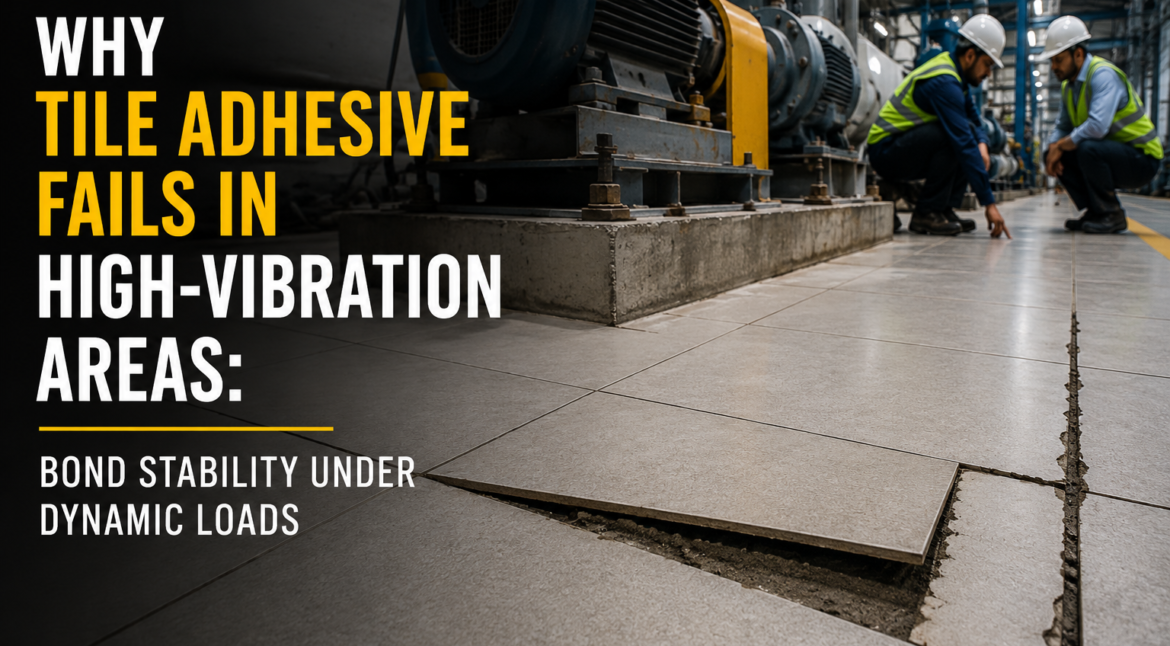
Why Tile Adhesive Fails in High-Vibration Areas: Bond Stability Under Dynamic Loads
Tiled surfaces installed in high-vibration environments face far greater stress than ordinary residential flooring. Industrial facilities, commercial kitchens, factories, machine rooms, transport hubs, and heavy-traffic areas constantly transfer movement and vibration into the substrate.
Under these conditions, standard adhesive systems often fail prematurely, leading to hollow sound, tile cracking, edge lifting, and complete tile detachment. In many cases, the issue is not the tile itself but the inability of the Tile Adhesive system to tolerate continuous dynamic loads.
Selecting the right adhesive system becomes critical for maintaining long-term tile stability in vibration-prone environments.
Common Question Asked:
Q.1 Why do tiles loosen in high-vibration areas?
Tiles loosen because repeated vibration and dynamic loading weaken adhesive bonding, especially when rigid or low-performance adhesives are used.
What Are High-Vibration Tiled Areas?
High-vibration areas are locations where continuous movement or repetitive mechanical loads affect the tiled substrate.
These include:
- industrial factories
- machine foundations
- transport terminals
- commercial kitchens
- manufacturing plants
- equipment rooms
- loading zones
In such environments, tiled surfaces experience repeated stress cycles throughout their service life.
How Vibration Affects Tile Bonding
Continuous vibration creates movement between:
- substrate
- adhesive layer
- tile surface
Over time, this movement weakens the adhesive interface and causes:
- loss of bond strength
- hollow sound beneath tiles
- edge cracking
- tile debonding
Rigid adhesive systems fail faster because they cannot absorb dynamic stress effectively.
Common Tile Failures in High-Vibration Areas
Hollow Sound Beneath Tiles
Repeated vibration gradually separates tiles from the adhesive bed.
Tile Edge Cracking
Movement stress concentrates near tile corners and edges.
Tile Debonding
Weak adhesive systems lose bonding strength under repeated vibration cycles.
Joint Cracking
Movement transfers stress into grout joints and weakens joint stability.
Why Flexible Tile Adhesive Systems Perform Better
A high-performance tile adhesive system must:
- absorb movement stress
- maintain bond flexibility
- resist repeated vibration
- distribute dynamic loads evenly
Flexible adhesive systems improve long-term performance in demanding industrial and commercial applications.
Role of Polymer Tile Adhesive in Dynamic Load Areas
Unlike ordinary cement adhesive, polymer tile adhesive systems improve:
- flexibility
- adhesion strength
- impact resistance
- vibration tolerance
For commercial flooring exposed to moderate movement and repetitive foot traffic, Teratile Prolix helps improve bonding stability and reduce stress-related tile loosening.
In industrial flooring where higher bonding durability is required, Teratile Gold supports stronger adhesion performance under dynamic load conditions.
Why Bonding Strength Matters Under Dynamic Loads
High-vibration areas continuously transfer stress into the adhesive layer.
Weak bonding causes:
- gradual adhesive fatigue
- micro-separation beneath tiles
- reduction in load-bearing capacity
For heavy-duty tiled floors subjected to continuous operational movement, Teratile Diamond helps improve load resistance and long-term bonding performance.
In machine rooms and industrial service areas where stronger substrate compatibility is required, Teratile Platinum improves adhesion reliability under demanding site conditions.
Importance of Floor Tile Adhesive in Industrial Areas
A durable floor tile adhesive becomes essential where:
- rolling loads are present
- machinery vibration occurs
- repetitive impact stress develops
The adhesive must tolerate both:
- vertical load transfer
- lateral movement stress
For factory flooring and heavy-traffic tiled surfaces, Teratile GP helps maintain bonding consistency and improved floor durability.
Where economical yet reliable floor bonding performance is required, Teratile Silver supports stable tile adhesion under regular traffic conditions.
Waterproof Tile Adhesive in Moisture-Prone Vibration Areas
Many high-vibration environments also involve moisture exposure.
Examples include:
- commercial kitchens
- washdown areas
- industrial cleaning zones
Using a waterproof tile adhesive system helps:
- reduce moisture penetration
- improve adhesive durability
- prevent moisture-related debonding
For wet industrial conditions exposed to both vibration and moisture, Teratile Prolix Extra helps improve waterproof bonding performance.
Epoxy Tile Adhesive for Extreme Stress Conditions
In areas exposed to severe vibration and operational movement, epoxy tile adhesive systems provide:
- stronger adhesion
- higher chemical resistance
- better vibration tolerance
- improved durability on difficult substrates
For industrial structures and vibration-prone service areas, FLEXOPLUS helps maintain high bond strength and long-term tile stability under dynamic stress conditions.
Importance of Bonding Additives in Difficult Substrates
Certain substrates require additional adhesion support.
Bonding additives help:
- improve substrate compatibility
- increase bonding strength
- reduce adhesive shrinkage
For renovation flooring and difficult concrete substrates, ADMIX EXTRA BOND improves adhesive bonding consistency and durability.
Why Surface Preparation Matters in High-Vibration Areas
Even high-performance adhesives fail if the substrate is weak.
Poor surface preparation leads to:
- weak bonding zones
- hollow sound formation
- uneven stress transfer
The substrate should be:
- structurally stable
- clean and dust-free
- properly levelled
- free from laitance and loose particles
Common Site Mistakes That Cause Adhesive Failure
Using Rigid Adhesive in Movement Areas
Rigid adhesives crack under repeated vibration.
Inadequate Adhesive Coverage
Voids beneath tiles weaken load resistance.
Poor Substrate Preparation
Loose concrete reduces bonding performance.
Ignoring Expansion Joints
Movement stress accumulates within tiled surfaces.
Early Loading Before Full Cure
Premature operational traffic weakens adhesive strength.
Best Practices for Tiling High-Vibration Areas
Select Flexible Adhesive Systems
Use adhesives designed for movement and industrial stress.
Ensure Full Adhesive Contact
Avoid hollow pockets beneath tiles.
Maintain Proper Expansion Joints
Movement joints help absorb vibration stress.
Prepare the Surface Correctly
Ensure strong substrate bonding conditions.
Allow Proper Adhesive Curing
Prevent early operational loading.
Why Tile Adhesive Selection Determines Long-Term Performance
In vibration-prone environments, adhesive performance directly affects tile durability.
Using the correct tile adhesive system helps:
- resist dynamic stress
- reduce tile debonding
- improve load transfer
- maintain floor stability
- reduce maintenance issues
Proper adhesive selection significantly improves tiled floor lifespan in industrial and commercial applications.
Conclusion
High-vibration areas place continuous stress on tiled surfaces, making adhesive performance critical for long-term durability. Standard adhesive systems often fail because they cannot tolerate repeated movement and dynamic loading.
Using advanced polymer tile adhesive systems such as Teratile Prolix, Teratile Gold, Teratile Diamond, and Teratile Platinum helps improve bonding flexibility and vibration resistance. In more demanding industrial applications, epoxy tile adhesive systems like FLEXOPLUS provide stronger adhesion and superior durability under extreme stress conditions.
Combined with proper surface preparation and expansion joint design, the correct adhesive system helps prevent tile failure and improves long-term floor performance. For more information, Contact Us.
FAQs
-
1. Why do tiles loosen in vibration-prone areas?
Continuous movement weakens adhesive bonding and creates stress beneath tiles.
-
2. Is polymer tile adhesive suitable for industrial flooring?
Yes, polymer-modified adhesives improve flexibility and vibration resistance.
-
3. Why is hollow sound common in industrial tiled floors?
Hollow sound occurs due to incomplete adhesive bonding beneath tiles.
-
4. When should epoxy tile adhesive be used?
Epoxy adhesives are preferred in high-stress, vibration-prone, and industrial environments.
-
5. Why are expansion joints important in tiled industrial floors?
They help absorb movement stress and reduce tile cracking or debonding.