


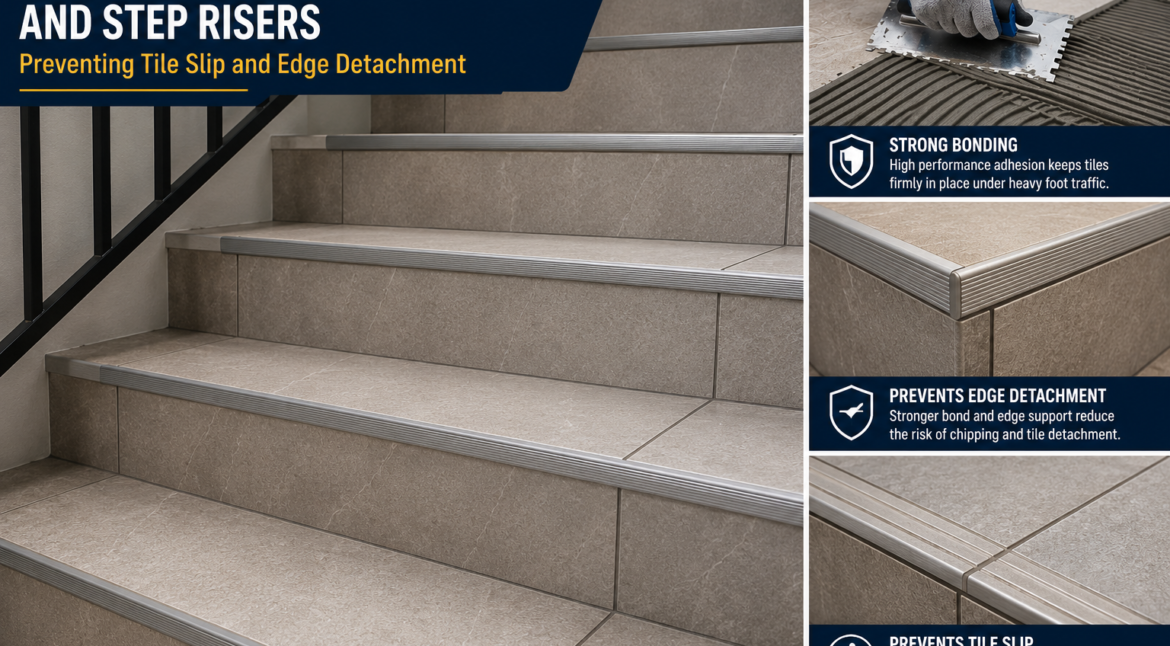
Tile Adhesive for Staircases and Step Risers: Preventing Tile Slip and Edge Detachment
Staircases are one of the most demanding tiled areas in any building. Unlike regular floors, stairs are exposed to concentrated foot traffic, edge impact, vibration, and constant movement stress. Because of this, tile failures on staircases are far more common than on flat surfaces.
Problems such as tile slipping, hollow sound, cracked edges, and tile detachment usually begin at the step risers and nosing areas where stress concentration is highest. In many cases, these failures occur because the wrong tile adhesive system was selected or applied incorrectly.
Proper adhesive selection and installation methods are critical for achieving durable staircase tiling performance.
Common Question Asked:
Q.1 Why do staircase tiles loosen or detach over time?
Staircase tiles fail mainly due to inadequate bonding, poor adhesive coverage, movement stress, moisture exposure, and improper edge support.
Why Staircases Are High-Stress Tiling Areas
Staircases experience repeated mechanical stress every day.
Unlike flat floors:
- Stair edges receive concentrated load
- risers experience vibration and movement
- Step nosing areas are prone to impact damage
These conditions create higher stress on the adhesive layer beneath the tile.
Common Tile Failures on Staircases
1. Tile Slip During Installation
Vertical risers and stair edges often cause tiles to slide before adhesive sets properly.
2. Edge Detachment
Tile edges and corners become weak due to repeated impact and inadequate support.
3. Hollow Sound Under Tiles
Poor adhesive coverage creates air voids beneath staircase tiles.
4. Cracking at Step Nosing
Stress concentration at stair edges causes cracking and tile damage.
Why Standard Adhesives Fail on Staircases
Basic adhesive systems may not tolerate:
- vertical stress
- vibration
- Repeated foot traffic
- edge loading
Staircases require stronger bonding performance and better flexibility compared to standard wall or floor applications.
Role of Polymer Tile Adhesive in Staircase Applications
Using polymer tile adhesive improves:
- bonding strength
- flexibility
- slip resistance during installation
- durability under movement stress
Polymer-modified systems are better suited for demanding staircase applications because they maintain stronger adhesion under dynamic loading conditions.
Products like:
help improve tile stability and reduce detachment risk on staircases.
Why Adhesive Coverage Is Critical on Stair Edges
Incomplete adhesive coverage is one of the main causes of staircase tile failure.
Voids beneath tiles lead to:
- hollow sound
- weak edge support
- cracking under impact
Full adhesive contact becomes especially important at:
- stair nosing
- tile corners
- risers
Using suitable products like:
helps achieve better load distribution and bonding consistency.
Floor Tile Adhesive Performance on Staircases
A high-performance floor tile adhesive is necessary because staircases function as concentrated load-bearing surfaces.
The adhesive must:
- Resist repeated traffic
- maintain the bond under vibration
- support edge loading without cracking
Products such as:
They are commonly used where improved floor bonding performance is required.
Waterproof Tile Adhesive for Wet Staircases
Outdoor staircases and wet-area stairs face additional challenges due to moisture exposure.
Water penetration weakens bonding over time and increases tile detachment risk.
Using a waterproof tile adhesive helps:
- reduce water absorption
- improve long-term bonding
- Enhance durability in wet conditions
This is especially important for:
- external staircases
- poolside steps
- commercial entrances
- utility area stairs
Epoxy Tile Adhesive for Heavy-Duty Staircases
In industrial or high-performance applications, epoxy tile adhesive provides stronger adhesion and durability.
A product like Flexoplus offers:
- high bond strength
- chemical resistance
- improved durability under heavy stress
Epoxy systems are suitable for:
- industrial staircases
- heavy traffic zones
- areas exposed to moisture or chemicals
Importance of Bonding Additives
In renovation projects or difficult substrates, additional bonding support may be needed.
Products such as:
help improve:
- adhesion performance
- substrate compatibility
- bonding durability
This reduces the chances of tile loosening over time.
Common Site Mistakes That Cause Stair Tile Failure
Inadequate Surface Preparation
Dust, laitance, and uneven substrate reduce adhesive performance.
Poor Adhesive Coverage
Insufficient adhesive beneath tile corners creates weak points.
Using Wall Adhesive on Staircases
Light-duty adhesives may not handle staircase stress effectively.
Incorrect Tile Alignment
Improper tile placement increases stress concentration at edges.
Excessive Water Addition
Overwatering weakens adhesive strength and durability.
Best Practices for Staircase Tile Installation
Prepare the Surface Properly
Ensure the substrate is level, clean, and structurally stable.
Use Polymer-Modified Adhesive
Select adhesive suitable for movement and load conditions.
Ensure Full Tile Coverage
Avoid voids beneath corners and edges.
Use Proper Troweling Technique
Maintain uniform adhesive thickness.
Allow Proper Curing Time
Prevent early loading before adhesive gains strength.
Why Tile Adhesive Selection Matters on Staircases
Staircases experience far greater stress than normal tiled floors.
Using the right tile adhesive helps:
- reduce tile slip
- improve edge support
- prevent debonding
- enhance long-term durability
Proper adhesive selection significantly reduces maintenance and repair issues.
Conclusion
Staircases and step risers are highly demanding tiled surfaces where improper bonding quickly leads to tile slip, hollow sound, and edge detachment.
Using high-performance polymer tile adhesive systems improves flexibility, adhesion, and durability under movement and traffic stress. Products like Teratile Prolix, Teratile Gold, Teratile Diamond, and Flexoplus help provide stronger bonding performance for staircase applications.
Combined with proper installation practices and full adhesive coverage, the right adhesive system ensures safer, more durable, and long-lasting staircase tiling. For more information, Contact Us.
FAQs
-
1. Why do staircase tiles detach at edges?
Edge detachment occurs due to poor adhesive coverage and repeated impact stress.
-
2. Is polymer tile adhesive suitable for staircases?
Yes, polymer-modified adhesives provide better flexibility and bonding strength.
-
3. Why is hollow sound common on staircase tiles?
Hollow sound is caused by air voids beneath tiles due to incomplete adhesive coverage.
-
4. When should epoxy tile adhesive be used?
Epoxy adhesive is used in heavy-duty or moisture-exposed staircase applications.
-
5. Why is waterproof tile adhesive important outdoors?
It improves bonding durability under rainwater and moisture exposure.