


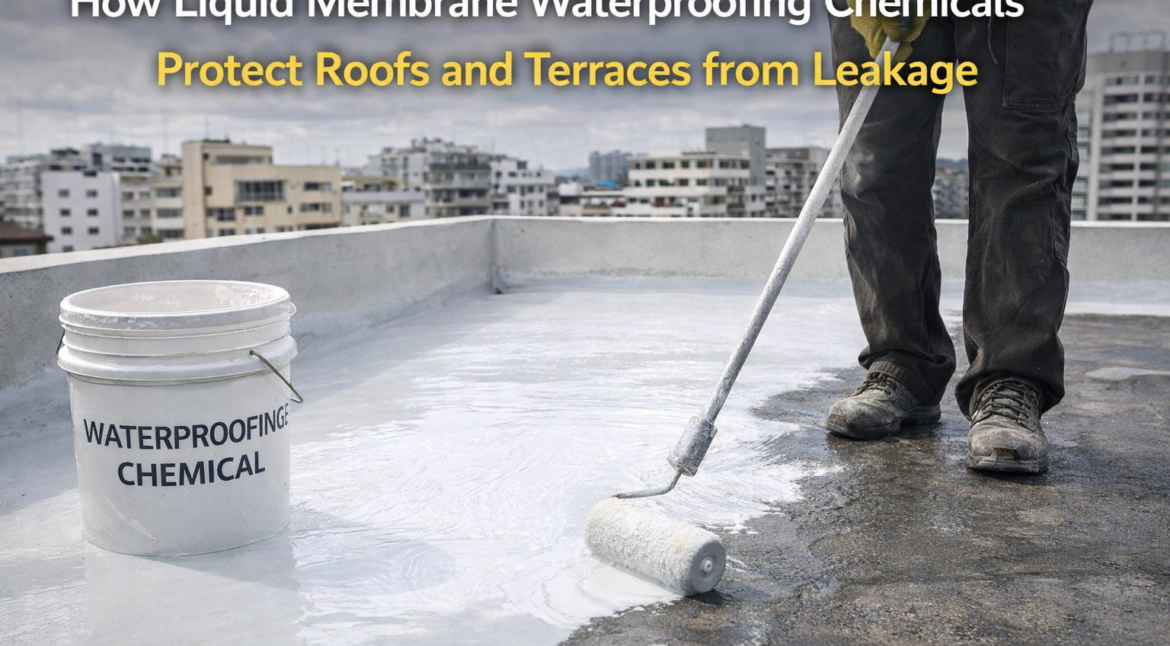
How Liquid Membrane Waterproofing Chemicals Protect Roofs and Terraces from Leakage
Water leakage from roofs and terraces is one of the most common structural problems in residential and commercial buildings. Roof slabs are constantly exposed to rainfall, temperature fluctuations, UV radiation, and structural movement. Over time, these conditions can cause micro-cracks in concrete surfaces, allowing water to penetrate into the structure.
This is where waterproofing chemicals play a critical role. Modern waterproofing systems create protective barriers that prevent moisture from entering the structure. Among these solutions, liquid membrane systems have become increasingly popular because they form seamless waterproof layers over concrete surfaces.
Liquid membranes are applied directly onto the roof surface and create a continuous waterproof film that blocks water penetration. Unlike traditional sheet membranes, liquid systems can easily cover irregular surfaces, joints, and corners without creating weak seams.
Understanding how these systems work helps builders and contractors choose the right waterproofing solution for roofs and terraces.
Common Question Asked:
Q.1 Can waterproofing chemicals completely stop roof leakage?
Yes, when applied correctly, waterproofing chemicals such as liquid membrane systems create a protective barrier that prevents water from penetrating concrete surfaces and reduces the risk of long-term leakage.
Why Roofs and Terraces Are Vulnerable to Leakage
Roof slabs experience more environmental stress than most other structural components. Over time, several factors contribute to water infiltration.
Temperature Expansion and Contraction
Concrete expands in hot weather and contracts when temperatures drop. This repeated movement can create small cracks on the roof surfaces.
Rainwater Exposure
Roof slabs are constantly exposed to standing water during heavy rainfall, which increases the risk of seepage through cracks and pores.
UV Radiation Damage
Ultraviolet rays gradually deteriorate surface coatings and protective layers, reducing their effectiveness.
Poor Waterproofing Systems
Improper application of waterproofing materials often leads to weak areas where water can enter.
Using reliable waterproofing chemicals is essential for protecting roofs against these conditions.
What Is Liquid Membrane Waterproofing?
Liquid membrane waterproofing is a coating-based waterproofing system applied directly to concrete surfaces. Once applied, the material cures to form a flexible, seamless membrane that blocks water penetration.
Unlike sheet membranes that rely on joints and overlaps, liquid membranes create a continuous barrier across the entire surface.
Key advantages include:
- Seamless waterproof protection
- Easy application on complex surfaces
- Flexibility to handle structural movement
- Strong adhesion to concrete substrates
Because of these characteristics, liquid membranes are widely used for roof slabs, terraces, balconies, and exposed decks.
How Waterproofing Chemicals Prevent Roof Leakage
Waterproofing chemicals work by blocking the pathways through which water travels into concrete. Liquid membrane systems perform this function through multiple mechanisms.
1. Creating a Seamless Waterproof Barrier
Liquid membrane coatings form a continuous protective layer over the roof surface. This eliminates weak joints where water could enter.
For example, systems such as SUPERKOT are designed to create durable waterproof films that prevent water infiltration in exposed roof structures.
Because the membrane is seamless, it significantly reduces the risk of leakage compared to traditional waterproofing methods.
2. Filling Micro-Cracks in Concrete
Concrete surfaces naturally contain small pores and hairline cracks. Water can easily travel through these microscopic channels.
Crystalline waterproofing membranes such as Polycote CWP penetrate and seal these imperfections, creating a dense protective coating.
This helps stop water from reaching deeper structural layers.
3. Providing Flexible Protection Against Movement
Roofs often undergo structural movement due to thermal expansion, shrinkage, or building settlement.
Liquid membranes remain flexible after curing. This flexibility allows them to stretch slightly without cracking.
Products like SUPERKOT N are formulated to accommodate such movement while maintaining waterproof protection.
4. Protecting Against Weather and UV Exposure
Roof surfaces are constantly exposed to harsh environmental conditions. High-quality waterproofing chemicals contain additives that improve resistance to:
- UV radiation
- temperature fluctuations
- moisture penetration
This ensures long-term protection even in challenging weather conditions.
Other Types of Waterproofing Chemicals Used in Structures
Although liquid membranes are highly effective for roofs and terraces, other waterproofing technologies are used depending on the structural requirements.
Cement-Based Waterproofing
Cement based waterproofing systems are commonly used in water tanks, bathrooms, and basements. These materials are applied as slurry coatings that bond strongly with concrete surfaces.
They provide excellent adhesion and durability in areas exposed to constant moisture.
Crystalline Waterproofing Systems
Another advanced method involves crystalline waterproofing technologies. These systems react with moisture and cement particles inside concrete to form crystals that block water pathways.
Crystalline waterproofing is particularly effective for internal waterproofing of structural concrete.
Best Practices for Applying Waterproofing Chemicals on Roofs
For waterproofing systems to perform effectively, proper application practices must be followed.
Surface Preparation
The roof surface must be clean, dust-free, and free from loose particles before applying waterproofing materials.
Crack Repair
Visible cracks should be repaired before applying waterproof coatings.
Proper Application Thickness
Applying the correct number of coats ensures that the membrane forms a strong waterproof barrier.
Adequate Curing Time
Waterproofing materials must be allowed to cure properly before exposure to heavy rainfall or foot traffic.
Following these practices significantly improves waterproofing performance.
Why Liquid Membrane Waterproofing Is Ideal for Roofs
Liquid membranes have become a preferred solution for roof waterproofing due to their ability to handle complex surface conditions.
Key benefits include:
- seamless waterproof layer
- easy application on irregular surfaces
- strong adhesion to concrete
- resistance to weather damage
These characteristics make them particularly suitable for terraces and roof slabs that experience frequent water exposure.
Conclusion
Roof and terrace leakage can lead to serious structural damage if not addressed properly. Using the right waterproofing chemicals is essential for preventing moisture penetration and protecting concrete structures.
Liquid membrane systems provide a highly effective waterproofing solution because they create seamless protective barriers that block water entry. When combined with proper surface preparation and correct application practices, these systems can significantly extend the life of roof structures.
Modern waterproofing technologies such as liquid membranes, cement-based coatings, and crystalline systems provide builders with reliable solutions to prevent leakage and maintain durable structures. For more information, Contact Us.
FAQs
-
1. What are waterproofing chemicals used for?
Waterproofing chemicals are used to protect concrete structures from water penetration by creating protective barriers on or within the concrete surface.
-
2. Where is liquid membrane waterproofing commonly used?
Liquid membrane systems are commonly used on roofs, terraces, balconies, and exposed concrete surfaces.
-
3. How long does roof waterproofing last?
The lifespan depends on the material used and application quality, but well-applied waterproofing systems can last many years.
-
4. Can waterproofing chemicals repair cracks in concrete?
Some waterproofing systems can seal small cracks, but larger cracks usually require repair before applying waterproof coatings.
-
5. What is the difference between liquid membrane and crystalline waterproofing?
Liquid membranes form surface coatings, while crystalline waterproofing works internally within concrete by blocking capillary pores.