


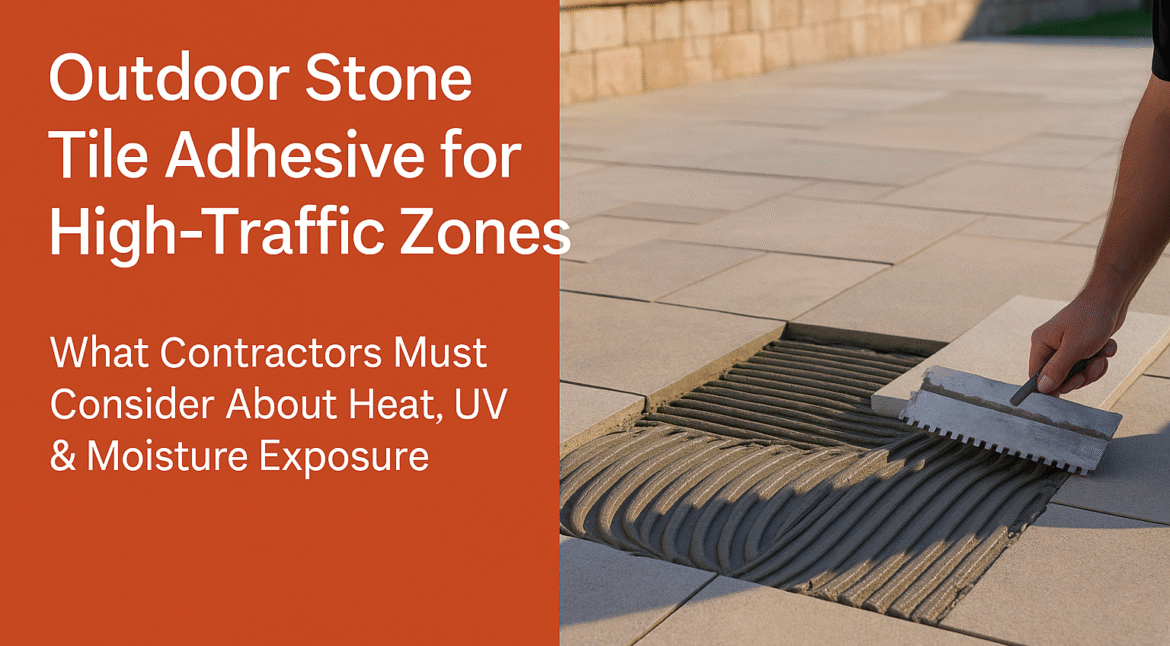
Outdoor Stone Tile Adhesive for High-Traffic Zones: What Contractors Must Consider About Heat, UV & Moisture Exposure
Outdoor stone installations require more than good craftsmanship. They demand materials capable of handling some of the harshest environmental conditions—direct sunlight, heavy rainfall, temperature swings, and continuous foot movement. Whether it’s an exterior walkway, parking area, terrace, or commercial entrance zone, the adhesive used underneath the stone tiles determines how long the installation will last.
This guide explains how to choose the right outdoor stone tile adhesive, what to consider when working in high-traffic areas, and why certain adhesives outperform others in challenging exterior environments.
Common Question Asked:
Q.1 Is regular tile adhesive suitable for outdoor stone installations in high-traffic zones?
No, regular tile adhesive is not suitable for outdoor stone installations in high-traffic areas. Outdoor applications require weather-resistant, high-strength, polymer-modified adhesive specifically designed for stone and capable of withstanding heavy loads, UV exposure, and moisture.
Why Outdoor Stone Installations Are More Demanding
Stone tiles—whether granite, marble, quartzite, or sandstone—are heavier and more dense than ceramic or vitrified tiles. Outdoors, they face additional stresses including:
- Direct sun exposure
- UV radiation
- Continuous wet–dry cycles
- Heavy foot traffic
- Thermal expansion
- Rainfall and moisture absorption
- Occasional vehicle load (in parking areas)
Using the wrong adhesive often leads to:
- Stone discoloration
- Bond failure
- Hollow or drummy sounds
- Cracks
- Efflorescence
- Stains from moisture
To avoid these failures, contractors must choose a stone tile adhesive that is engineered specifically for exterior environments.
Key Factors Contractors Must Evaluate
1. Heat and UV Resistance
Outdoor temperatures can rise dramatically, especially when stone absorbs heat. UV exposure also causes expansion and contraction cycles.
A high-performance outdoor tile adhesive should:
- Resist thermal shock
- Hold bond strength under elevated temperatures
- Avoid brittleness due to UV exposure
- Support expansion without cracking
Adhesives like TERATILE DIAMOND are designed for heavy stone tiles and outdoor environments where heat and UV are unavoidable.
2. Moisture and Rain Exposure
Moisture can penetrate through the stone if the adhesive is not water-resistant. Over time, this leads to:
- Staining
- Bond weakening
- Freeze–thaw damage in colder regions
- Discoloration of natural stone
For moisture-heavy environments—such as terraces, parking areas, or pathways—adhesives like TERATILE SINEX offer strong water resistance and long-term durability.
3. Load-Bearing Capacity
High-traffic outdoor areas experience:
- Daily foot movement
- Trolleys and carts
- Occasional two-wheeler or car movement
- Pressure from outdoor furniture
- Continuous vibration
A regular adhesive cannot handle these loads. A reliable outdoor stone tile adhesive must provide:
- High shear strength
- Strong compressive bonding
- Flexibility under dynamic loads
- Non-brittle formulation
For such conditions, TERATILE PROLIX EXTRA is a strong option due to its premium bonding strength and flexibility.
4. Stone Staining and Color Protection
Some adhesives release chemicals that react with natural stone and cause stains or patches. Especially with marble, limestone, or light-colored stones, choosing a non-reactive adhesive is essential.
A stone-safe adhesive should:
- Have low alkalinity
- Prevent moisture migration
- Avoid mineral staining
- Maintain stone aesthetics over time
TERATILE DIAMOND is designed for stone installations and does not cause staining or discoloration.
5. Flexibility and Crack Resistance
Outdoor surfaces expand and contract more than indoor areas. A rigid adhesive leads to:
- Cracks
- Debonding under thermal pressure
- Tile shifting
A flexible, polymer-modified adhesive ensures the installation remains intact. Products like TERATILE PROLIX EXTRA offer high flexibility for exterior floors.
6. Compatibility With Substrates
Outdoor floors may be built on:
- Concrete beds
- Screeds
- Cement slabs
- Existing tiles (in renovation)
Each substrate behaves differently under the weather. A good adhesive should bond well to all outdoor substrates and support the weight of stone.
Choosing the Right Adhesive Based on Application Type
1. Stone Walkways and Pathways
Outdoor walkways handle constant foot movement and exposure to weather. In these areas, installers usually prefer a sturdy adhesive that supports heavy stone and resists moisture. Options such as TERATILE DIAMOND or TERATILE PROLIX EXTRA are often used because they maintain a firm bond under regular outdoor use.
2. Terraces and Rooftops
Terraces heat up during the day and cool quickly at night, which causes frequent expansion. A flexible outdoor-grade adhesive helps manage this movement. Products like TERATILE SINEX or TERATILE PLATINUM are commonly chosen for such temperature-sensitive areas.
3. Parking Areas and Commercial Entrances
Spaces such as parking zones and commercial entryways experience heavier loads from foot traffic, carts, and occasional vehicles. These areas benefit from an adhesive with higher compressive strength. Installers often use stronger formulations like TERATILE PROLIX EXTRA or TERATILE DIAMOND for long-term stability.
Common Mistakes Contractors Should Avoid
1. Using Cement Mortar Instead of Adhesive
Cement mortar absorbs water and weakens over time. It is not suitable for outdoor stone installations.
2. Skipping Surface Preparation
Dust, loose particles, or an uneven base can lead to hollow tiles or early failure.
3. Not Using the Back-Butter Method for Stone Tiles
Stone tiles are heavier; back-buttering ensures full coverage and stronger bonding.
4. Ignoring Movement Joints
Outdoor areas require expansion joints to accommodate temperature fluctuations.
5. Not Considering Stone Porosity
Some stones absorb water quickly; sealing or selecting stone-safe adhesive prevents stains.
Conclusion
Outdoor stone tiling is a long-term investment, and choosing the right adhesive is the foundation of a durable installation. High-traffic areas demand adhesives that can resist heat, UV rays, moisture, staining, and constant load. When contractors use a well-formulated outdoor stone tile adhesive, they eliminate the risk of tile popping, cracking, and weather-related damage.
Products like TERATILE DIAMOND, TERATILE PROLIX EXTRA, TERATILE SINEX, and TERATILE PLATINUM offer the performance and reliability needed for exterior stone flooring. With proper surface preparation and installation practices, these adhesives ensure the outdoor stone surface remains stable, safe, and visually appealing for years. For more information, Contact Us.
FAQs
-
1. Which adhesive is best for outdoor stone tiles?
Adhesives like TERATILE DIAMOND are ideal because they offer strong bonding, weather resistance, and stain-free performance for natural stone.
-
2. Can indoor tile adhesive be used outdoors?
No, indoor adhesives are not designed to handle UV, heat, and rain exposure. Outdoor installations require weatherproof adhesives.
-
3. What causes stone tiles to pop in outdoor areas?
Thermal expansion, moisture penetration, and weak bonding are the main reasons. Using a flexible, water-resistant adhesive prevents this.
-
4. Does stone require a special adhesive?
Yes. Stone tiles are heavier and more porous, so they need an adhesive specifically designed for stone bonding.
-
5. How thick should outdoor tile adhesive be?
Typically 3–6 mm, depending on the stone size and the substrate condition.