

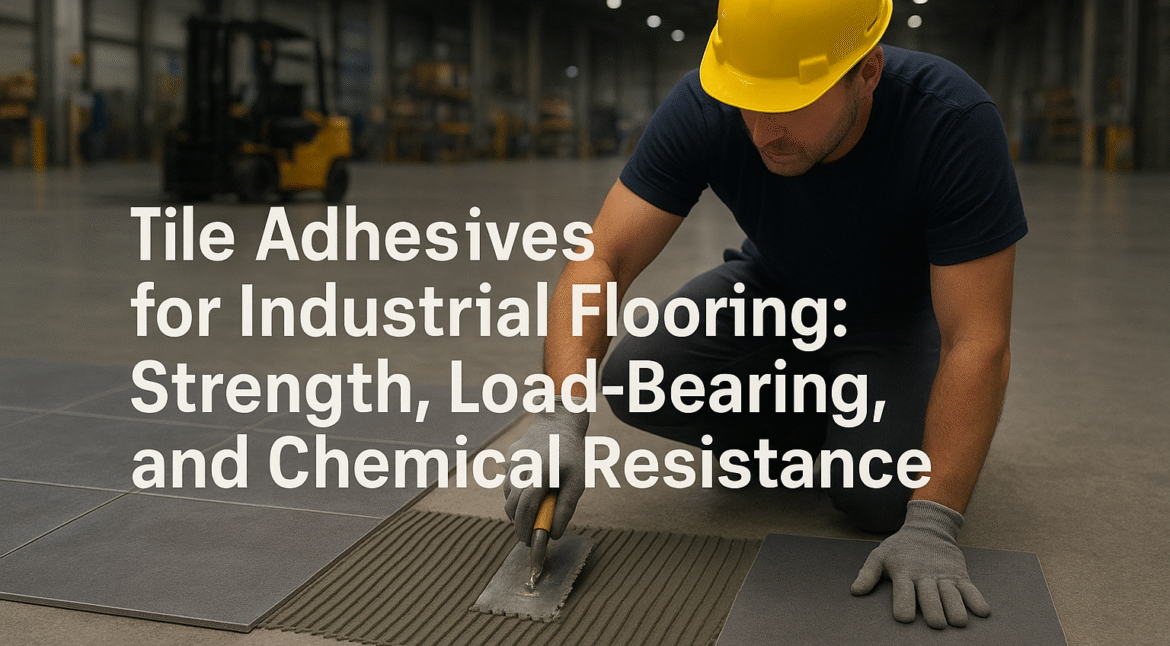
Tile Adhesives for Industrial Flooring: Strength, Load-Bearing, and Chemical Resistance
Industrial floors face extreme demands due to heavy machinery, forklifts, and constant foot traffic, alongside exposure to oils, acids, and cleaning chemicals. Unlike residential or commercial floors, industrial environments require the right tile adhesives that combine high strength, chemical resistance, and long-term durability. Selecting the wrong adhesive can compromise floor integrity, leading to cracked or detached tiles, costly maintenance, and even safety hazards for workers and equipment. Using high-performance, industrial-grade adhesives ensures floors remain structurally sound, safe, and capable of withstanding the toughest operational conditions.
Common Question Asked:
1. Can tile adhesives handle heavy loads and chemical exposure in industrial floors?
Yes, high-performance tile adhesives are designed to withstand heavy loads, constant traffic, and exposure to harsh chemicals in industrial environments.
Why Industrial Flooring Requires Specialized Tile Adhesives
Industrial flooring faces challenges that typical residential adhesives cannot handle:
- Heavy Traffic from Machinery: Industrial floors often carry forklifts, heavy equipment, and pallets. Regular adhesives cannot bear the weight and vibration, causing tiles to loosen over time.
- Chemical Spills and Exposure: Factories, warehouses, and processing plants often deal with oils, acids, or cleaning chemicals. These substances can degrade inferior adhesives, leading to floor damage.
- Thermal and Mechanical Stress: Temperature fluctuations and mechanical stress in industrial environments can weaken adhesive bonds if the right product is not chosen.
Using high-quality floor tile adhesive ensures the flooring withstands these challenges and remains stable over decades.
Key Properties of Industrial-Grade Tile Adhesives
To meet the demanding requirements of industrial flooring, adhesives must possess certain critical properties:
High Strength & Load-Bearing Capacity
Industrial floors demand adhesives that can handle heavy loads and constant foot or vehicle traffic. Products like Teratile Prolix and Teratile Prolix Extra offer exceptional load-bearing capacity and bonding strength for large tiles and high-traffic areas. Their formulation ensures tiles remain intact even under extreme pressure.
Chemical and Stain Resistance
In chemical processing plants, laboratories, and manufacturing facilities, floors are regularly exposed to harsh chemicals. High-performance adhesives like Teratile Platinum and Teratile Diamond provide excellent chemical resistance. These adhesives protect the flooring from degradation and chemical attacks, ensuring longevity.
Superior Bonding with Tiles & Substrates
Adhesion is a critical factor, especially for large or heavy tiles. Adhesives such as Teratile GP and Teratile MP deliver strong bonding to various substrates, including concrete, cement screeds, and industrial-grade subfloors. This superior adhesion prevents lifting or detachment of tiles over time.
Flexibility to Withstand Vibrations and Impact
Industrial floors are constantly subjected to vibrations from machinery and equipment. A flexible adhesive is necessary to absorb these movements without compromising the bond. High-performance polymer-modified adhesives like Teratile Prolix Extra combine flexibility with strength, reducing the risk of tile cracks and structural damage.
Applications of Heavy-Duty Tile Adhesives in Industries
Heavy-duty tile adhesives are widely used across multiple industrial sectors:
- Manufacturing Plants: For floors exposed to machinery, chemical spills, and heavy foot traffic.
- Warehouses and Logistics Hubs: To endure forklifts, pallets, and continuous movement.
- Chemical Processing Plants: Floors need high chemical resistance and non-slip surfaces.
- Food & Beverage Industries: Adhesives must resist water, cleaning agents, and temperature variations.
By selecting the right adhesive, facility managers can ensure floors are safe, durable, and compliant with industry standards.
Choosing the Right Tile Adhesive for Industrial Flooring
When selecting the best tile adhesive for industrial floors, several factors must be considered:
- Type of Tiles: Large-format tiles, vitrified tiles, or natural stones require higher bonding strength.
- Load Capacity: Adhesives must withstand the weight of machinery and traffic.
- Chemical Exposure: Floors in chemical environments need chemically resistant adhesives.
Environmental Conditions: Temperature fluctuations, moisture, and vibrations must be taken into account.
Best Practices for Industrial Flooring Installation
Proper installation enhances the performance and lifespan of industrial floors:
- Surface Preparation: Clean and level the substrate to remove dust, grease, or loose particles.
- Proper Mixing & Application: Follow the manufacturer’s instructions for water ratio and mixing. Apply adhesive evenly using the recommended trowel.
- Grouting & Curing Techniques: Allow proper curing time to ensure full strength. Avoid exposing newly laid tiles to heavy loads immediately.
By following these best practices, industrial floors maintain their integrity and performance over the long term.
Long-Term Performance and Cost Benefits
Investing in high-quality industrial tile adhesives offers multiple benefits:
- Reduced Maintenance: Fewer repairs, replacements, and disruptions in operations.
- Increased Lifespan: Floors remain stable and functional for decades.
- Safety & Compliance: Minimizes the risk of accidents and ensures adherence to safety standards.
Selecting the right floor tile adhesive is a cost-effective investment that protects both infrastructure and personnel.
Conclusion
Industrial flooring demands more than standard adhesives. Using high-performance, chemically resistant, and load-bearing adhesives like Teratile Prolix or Teratile Platinum ensures that floors withstand the toughest industrial conditions. Proper installation and maintenance further enhance durability, safety, and efficiency. For industries aiming for long-term reliability, choosing the right adhesive is not optional—it’s essential.
FAQs
-
1. What is the best tile adhesive for industrial floors?
The best tile adhesive for industrial floors is a high-strength, chemically resistant adhesive such as Teratile Prolix Extra or Teratile Platinum that can withstand heavy loads and harsh environments.
-
2. Is chemical resistance necessary for industrial tile adhesives?
Yes, chemical resistance is crucial to prevent adhesive degradation, staining, and damage in environments exposed to oils, acids, or cleaning agents.
-
3. How do adhesives prevent tile cracking under heavy load?
High-performance adhesives like Teratile Diamond and polymer-modified formulations absorb vibrations, distribute weight, and maintain bond integrity, reducing tile cracking.
-
4. Can industrial tile adhesives be used outdoors?
Yes, certain high-grade adhesives like Teratile Platinum and Prolix Extra are designed to handle outdoor conditions, including temperature variations, moisture, and heavy loads.
-
5. How can industrial flooring last longer with the right adhesive?
Using durable, high-strength adhesives and following proper installation and curing procedures ensures that the flooring remains stable, safe, and functional for decades.